
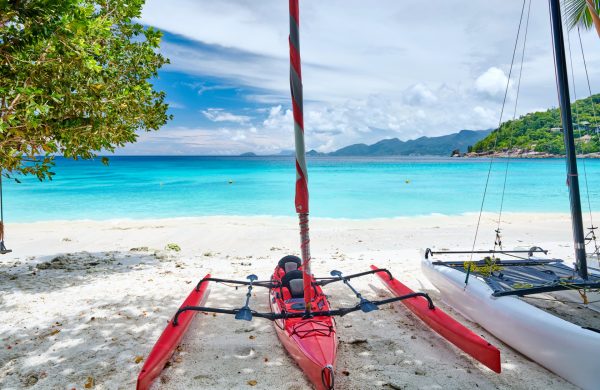
You’re at the helm of a small, simple, and maneuverable sailboat. A boat that lets you dip your toes in the water, on the edge of a beach or in a hidden cove where no one else goes. You’re alone in the world—or almost. The birds are close by. Could true freedom be right there, within reach of the bow… aboard a small sailboat?
This type of sailing isn’t a revolution—it’s a return to basics. A return to authentic navigation, where every detail matters and every action has meaning. Coastal raiding in a small sailboat is the art of sailing light, free, and above all, in harmony with nature. No technical constraints, no pressure—just the joy of gliding across the water, encountering wildlife and marine flora.
Key Takeaways
- Coastal raiding: Lightweight sailing close to the shore, to discover untouched landscapes.
- A small sailboat: Under 10 meters, easy to handle, with no unnecessary equipment.
- Freedom: No strict schedule, no marina reservations—just following your desires.
- Connection with nature: Watch dolphins, seabirds, or crystal-clear marine depths.
Coastal Raiding: A Symbol of Freedom
Simplicity First
Forget the large sailboats packed with electronics, complex navigation systems, and endless checklists. With a small sailboat, everything becomes simpler: less equipment, fewer breakdown risks, and more time to enjoy. A well-designed 6 to 10-meter sailboat can take you almost anywhere with minimal effort.
- No license required for boats under 6 meters (according to French regulations).
- Maneuverability: Dock in coves inaccessible to larger boats.
- Simplified maintenance: Less surface area, lower costs, less stress.
Total Immersion in Nature
Sailing close to the shore means discovering the sea differently. You’re no longer just a spectator—you’re the protagonist of your own adventure. Small sailboats allow you to quietly approach biodiversity-rich areas:
- Nature reserves: In Brittany, the Iroise Sea or the Glénan Islands are paradises for marine wildlife and flora enthusiasts.
- Wild islands: Ouessant, Molène, Batz… Stops where nature reigns supreme.
- Marine depths: With a shallow draft, explore shallow waters ideal for underwater observation.
Freedom of Movement
No need to book a marina in advance or follow a strict itinerary. With a small sailboat, you improvise. A sudden gust of wind? Take shelter in a cove. Feel like extending your stop? Drop anchor and enjoy. That’s true freedom.
- Wild anchorages: Spend the night in secluded spots, far from crowded marinas.
- Self-sufficiency: With water and food supplies, you can stay at sea for days without touching land.
- Flexibility: Change course based on the weather or your mood.
How to Organize Your Coastal Raid?
Choosing the Right Boat
You don’t need a high-end sailboat. A centerboard dinghy, a keelboat, or even a sport catamaran will do. The key is that it’s sturdy, maneuverable, and suited for coastal sailing.
- Example models:
- First 210 (Beneteau): Perfect for beginners, easy to handle.
- J/80: Fast and fun, ideal for team raids.
Planning Your Itinerary (Without Overplanning)
The goal of coastal raiding is to leave room for the unexpected. But that doesn’t mean setting off completely unprepared:
- Study nautical charts: Identify anchoring areas, currents, and tides.
- Check the weather: Even if you can adapt your route, it’s best to avoid unpleasant surprises.
- Plan backup stops: In case the weather turns bad.
Essential (and Minimalist) Equipment
No need to bring the entire boat with you. Here’s what’s essential:
- Safety: Life jackets, handheld VHF radio, first aid kit, flare gun.
- Navigation: Paper chart (just in case), portable GPS, compass.
- Comfort: A cockpit tent or awning to protect from sun or rain.
- Food: Simple, energy-rich meals (pasta, canned food, dried fruit, etc.).
The Most Beautiful Areas for Coastal Raiding in France
1. Brittany: A Land of Contrasts
Between wild coasts and picturesque ports, Brittany is an ideal playground for coastal raiding.
- The Iroise Sea: A UNESCO biosphere reserve, this is a must-visit spot for observing dolphins, seals, and a multitude of seabirds.
- The Glénan Islands: A paradise archipelago, accessible from Concarneau or Bénodet.
- The Pink Granite Coast: Unique landscapes, with pink rocks and turquoise waters.
2. The Mediterranean: Between Coves and Islands
Less tide, calmer waters, but equally rich biodiversity.
- The Calanques of Cassis: Spectacular cliffs and crystal-clear waters.
- The Hyères Islands: Porquerolles, Port-Cros… Wild stops just a stone’s throw from the mainland.
- Corsica: For the more adventurous, a raid along the Corsican coast is an unforgettable experience.
3. The Atlantic: Between Estuaries and Islands
- The Arcachon Basin: Between dunes and sandbanks, an ideal setting for relaxed sailing.
- The Charente Islands: Ré, Oléron, Aix… Stops rich in history and nature.
- Vendée: The Bay of Bourgneuf and the island of Noirmoutier offer diverse and preserved landscapes.
Testimonials: They Dared to Coastal Raid in a Small Sailboat
“I Rediscovered the Sea” – Thomas, 45
“After years of sailing on 12 to 15-meter sailboats, I decided to go back to basics. I bought a First 210 and did a 10-day raid in the Iroise Sea. What struck me? The silence. No engine, no stress—just the wind and the waves. And then, the encounters… Dolphins playing a few meters from the boat, seals watching you with curiosity. That’s what real sailing is.”
“An Adventure with the Family” – Claire, 38
“We rented a J/80 for a week in Brittany with our two children. At first, they were skeptical: ‘No TV, no video games?’ But after two days, they didn’t want to go back. They learned to steer, hoist the sails, and spot birds. And I rediscovered the joy of sailing without pressure.”
Mistakes to Avoid
1. Underestimating the Weather
Even in coastal raiding, the weather remains your worst enemy. A sudden gust of wind can turn a pleasant outing into a nightmare. Always check the forecast before setting off, and know when to turn back if needed.
2. Overloading the Boat
A small sailboat is designed to be light. Avoid overloading: too much weight = reduced performance and increased risks.
3. Neglecting Safety
Even if you’re sailing close to the shore, accidents can happen quickly. Life jackets are mandatory, keep a VHF radio within reach, and have basic first aid knowledge.
So, ready to take the plunge? The sea awaits.