
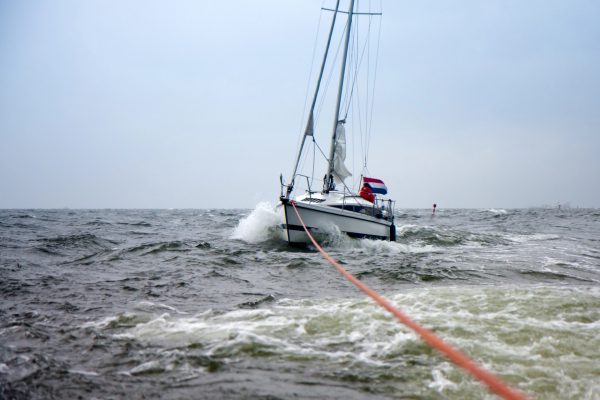
Boat maintenance is important, we all agree on that. We will not go back over engine maintenance, antifouling, or rigging checks here. You already know all about that. Today, we are going to talk about those small things we forget to inspect, or that we inspect while always putting off the moment to act. Yet these small problems can have serious consequences.
A weeping through-hull fitting, a forgotten anode, or a tired hatch gasket. Taken separately, these details seem harmless. We will sail along like this, telling ourselves we will deal with it… later. Yet together, these small troubles sketch the composite portrait of most pleasure-boating accidents. Boats almost never sink because of a spectacular event. They deteriorate in silence, season after season, while the owner postpones a check that would have taken ten minutes.
This article was born of an observation shared by everyone who frequents the docks. Serious damage almost always has a modest origin. I often speak of a “technical debt”. The language of maintenance, galvanic corrosion, or watertightness is sometimes frightening. We have therefore chosen to tell these stories without jargon, the way they are told at the harbour bar. Six common oversights, six stories, and for each one: the warning signs, what happens when you do nothing, and the simple gesture that prevents it all.
Why deferred maintenance is the pleasure boater’s first enemy
A technical debt that builds up in silence
Boat maintenance works like a debt. Each postponement adds to the previous one. The first winter, a gasket hardens. The second, it cracks. The third, water comes aboard. Nothing is visible until everything shows up at once. This is what boat insurers call lack of maintenance, and this reason features among the most frequently invoked to refuse compensation after a sinking.
What accident experience tells us
The stories of boats sunk at the dock or at anchor all look alike. A jammed bilge pump, a fouled float switch, a tired through-hull fitting. On boating forums, testimonies abound: a pump that siphons in the owner’s absence and would have drowned the boat within days, a worn check valve replaced just in time. Insurers themselves recommend, in the event of damage or a claim, keeping the bilge pumps in service and drying the bilges as soon as possible. In other words: that pump you have never tested is the first part demanded when it is already too late.
The hurried boater’s paradox
The paradox is cruel. The most cost-effective gestures are the quickest. A tube of sealant costs less than fifteen euros. Replacing an anode amounts to a few tens of euros. At the other end of the chain, an eaten-away drive leg or a rotten floor is counted in thousands. Checking time itself is measured in minutes. Here, case by case, are the six most frequent oversights.
Key takeaways
- Six oversights are enough to explain the majority of avoidable damage: an unsealed through-hull fitting, a consumed anode, a never-tested bilge pump, an unsuitable rope, unchecked navigation lights, tired hatch gaskets.
- Each check takes less than a quarter of an hour and rarely costs more than fifty euros.
- Untreated damage can cost thousands of euros and jeopardize insurance compensation, which frequently cites lack of maintenance.
- The best time for these checks: the spring commissioning and a mid-season inspection.
Case 1: the weeping through-hull fitting
The warning signs
A trace of salt water under a locker. a musty smell that does not go away despite ventilation. A bilge that is always damp. These are the first messages from a through-hull fitting whose seal is starting to fail.
What happens when you wait
You have all experienced this slight weeping, around a valve or a through-hull fitting. It is damp, but after a wipe with a rag, there is nothing left, until the next day. The first sail shakes the hull. The trickle of water becomes clearer, but it remains invisible from the cockpit. The neighbouring panel becomes soaked, the low electrical connections corrode. One day, the weeping turns into a stream of water and… the leak is there. Experienced boaters repeat it on the forums: a large through-hull fitting that breaks is enough to cause a major leak, and you then have to rush back to port with a bucket in hand.
The gesture that saves
Run your hand over every through-hull fitting in the spring and repair as soon as you have any doubt.
Case 2: the forgotten anode
A silent guardian
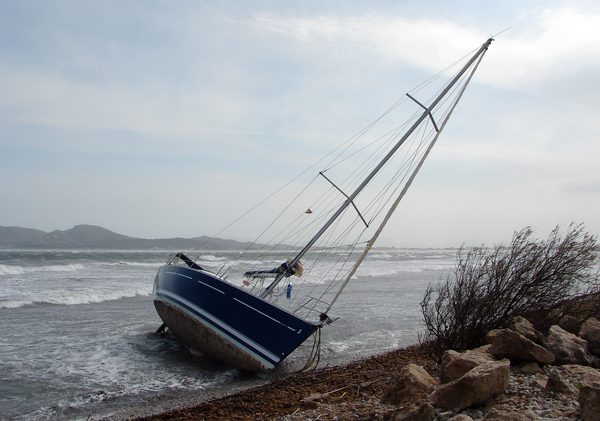
The sacrificial anode is a piece of zinc or aluminium fixed to the propeller, the shaft, or the hull. Its role: to be devoured in place of the boat’s noble metals. It is the anode that salt water attacks, not your bronze. The mechanism is called galvanic corrosion, but let us simply remember this: the anode dies so that the propeller may live.
What happens when you wait
Nobody looks at a submerged part. Yet professionals recommend checking the hull, propeller, and shaft anodes before every launch, and replacing them as soon as unusual corrosion appears on the protected parts. A consumed anode no longer protects anything. The propeller becomes pitted, the drive leg gets eaten away, efficiency drops. The bill for a drive leg easily exceeds that of ten seasons’ worth of anodes.
The gesture that saves
Every time the boat comes out of the water, look at your anodes. Replace them when they are reduced by half. Never paint them: paint isolates them and cancels their effect. Cost: a few tens of euros per season.
Case 3: the never-tested bilge pump
The most important and most neglected piece of equipment on board
It is the perfect trap. The bilge pump is never needed until the day everything depends on it. Fouled float switch, blown fuse, body blocked by debris: the failure is invisible until it declares itself.
What happens when you wait
And I am not even talking about grounding. A thunderstorm’s rain, a hatch left open: the water rises. One boater tells of discovering a shower pump that was siphoning and would have filled the boat in his absence. My neighbour at the anchorage saw his boat taking on water (30 cm in the bilges…) because of a leaking hatch. A boat laid over at the dock or sunk at anchor is among the most frequent and most costly claims, with the bonus of an insurance dispute over the compliance of the installation. After a sinking, the surveyor will ask for the logbook and the state of the installation.
The gesture that saves
Twice a season, pour a bucket of water into the bilge. Check that the automatic pump evacuates it. Dismantle and clean the filter. Bring a manual backup pump. Cost: zero euros and ten minutes.
Case 4: the rope unsuited to the task
The rope that betrays
A frayed halyard kept to save money. A stiff mooring line chafing through the cleat. An anchor line undersized for the boat. A worn rope gives no warning: it breaks, at the worst moment, under maximum load.
What happens when you wait
The break happens in a gust, during a mooring in swell or an emergency manoeuvre. The boat drifts away. A mooring line that snaps in a storm turns a peaceful dock into a collision field. And a line under tension that gives way can injure the person holding it.
The gesture that saves
Every spring, review your ropes. Look for chafe, broken sheaths, tired splices. Match the diameter and material to the actual use: a halyard is not a mooring line, an anchor line is not a sheet. Replace without hesitation any suspect line. Cost: far less than half a day of towing.
Case 5: the never-checked navigation lights
Here, we are talking about a different subject, under way.
“I never sail at night”
This is the phrase most often heard about navigation lights. It is also the most dangerous one, because you do not always get to choose the night. A delay, a breakdown, a longer crossing than planned: dusk catches you out.
What happens when you wait
The masthead light’s bulb blows on first switch-on. The port light has been dead for two seasons because of a corroded wire. In the event of an incident, an unlit boat engages its skipper’s liability. Without lights, it is impossible to signal your course; in the event of a collision, the fault is shared at best, entire at worst.
The gesture that saves
At commissioning, test all the lights, one by one, with the battery fully charged. Check the connections turned green with corrosion. Slip a set of spare bulbs and spare parts into a drawer known to the whole crew. Cost: one bulb, a few euros.
Case 6: the unrepaired hatch gaskets
The streaks that tell a story
A brown halo around the hatch. A damp mark on the ceiling panelling. A mouldy crossbeam at the foot of the forward berth. Each rainfall adds its drop to a slow infiltration passing through the tired gasket.
What happens when you wait
The plywood soaks, then delaminates. Mould settles into the fabrics. The insulation degrades. One day, a bulkhead panel has to be replaced: marine joinery whose cost has nothing in common with that of a tube of sealant.
The gesture that saves
Tighten the hatch screws sparingly. Re-seal every three to five years. At haul-out, test the roof front with a water jet. Treat any nascent halo as a warning, not as a stain. Cost: a tube of sealant and two hours.
Conclusion: the ten-minute rule
None of these six oversights requires any particular skill. All can be checked with your hands, your eyes, and a bit of method. The spring commissioning carries the bulk of the work: through-hull fittings, anodes, bilge pump, ropes, lights, gaskets. A mid-season inspection completes the check.
The boater who follows this routine sails with a peace of mind that money cannot buy. That is the beauty of boat maintenance: it is not a matter of technique, but of devotion. Ten minutes a month so that the sea remains a pleasure. It is, in the end, the best value for money in boating.