

Rig tuning is an often overlooked element, yet it is crucial for both the performance of the sailboat and safety.
Standing rigging adjustment depends on your sailboat and takes into account the type of rigging (masthead, fractional, straight or swept spreaders, etc.), the type of sails (full-batten, traditional, 3DL, etc.), and the use of the boat (racing, cruising), etc.
Definition of Standing Rigging
The standing rigging consists of the backstay, forestay, shrouds, lower shrouds, and cap shrouds,… 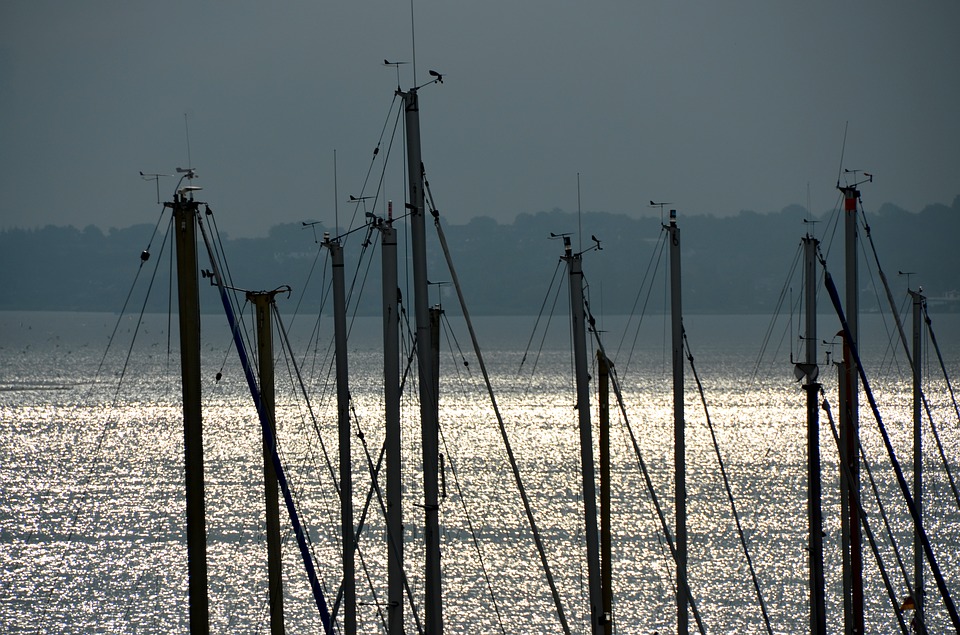 It is part of the overall rigging of a boat, along with the running rigging. The main purpose of the standing rigging is to keep the mast profile, which supports the sails, vertical. It is the compression of the mast that keeps it in place. The compression forces are very significant, so the standing rigging must be adjusted with precision.
An optimized profile is not just a straight profile; it must be adjusted. To do this, we act on three points: lateral adjustment, rake (the angle formed by the profile from front to back with the vertical of the boat), and bend (the curve given to the profile).

How to Adjust the Standing Rigging?
Lateral adjustment involves centering the mast relative to each side of the sailboat. This adjustment is made on the shrouds and cap shrouds of the sailboat. It will be done during the stepping of the mast or during a simple rigging check during the season. In addition to visual inspection by standing at the base of the mast, a good method is to send a measuring tape to the top of the mast using the mainsail halyard. The distances between the top of the mast and each chainplate must be the same on both sides. The turnbuckles must be adjusted in the same way on both sides.
The adjustment of the mast rake is important for the balance of the boat and the helm balance. This adjustment affects the entire mast. By tilting the mast forward, the center of effort moves forward, making the boat more tender, while tilting it backward makes the boat more weatherly. We will therefore adjust the tension of the forestay.
Adjusting the mast bend also allows you to adjust the sails, flatten the mainsail in a breeze, and fine-tune the settings. The mast bend adjustment will be done with the lower forestay and the backstay adjustment. On boats with swept spreaders, there will be no backstay. However, in most cases, a straight mast is the correct setting.
Tools for Adjusting the Rigging
The tools needed to adjust the rigging, regardless of the type of sailing, are as follows:
– Appropriate open-end wrenches.
– Multi-grip pliers to remove the split pins that hold the turnbuckles in place.
– A flathead screwdriver to spread new split pins.
– An adjustable wrench suitable for turnbuckles.
– Electrical tape to cover the split pins.
– Marine grease.
– Spare split pins.
Adjusting Your Rigging at the Port
 Align the mast with the keel axis. You must adjust the turnbuckles identically on each side. The check can be done either by eye or with a measuring tape.
– Tighten the lower shrouds so that the lower part of the mast, up to the spreaders, is fixed.
– Align the masthead using the cap shrouds. Check the adjustment using the mainsail luff groove.
– To adjust the rake, adjust the length of the forestay.
Adjusting Your Rigging While Sailing
It is at sea, with the rigging under load, that the mast adjustments are best appreciated, regardless of the type of rigging on the boat. Choose a day with calm seas and a maximum wind force of 3. When sailing upwind, check the alignment of the luff, which must be absolutely straight. If it is not, adjust the leeward shrouds and tack to adjust the shrouds on the other side, until perfect alignment is achieved.
Under sail, it is advisable to mark the position of the halyards with an indelible marker or colored thread to quickly find the settings again.