
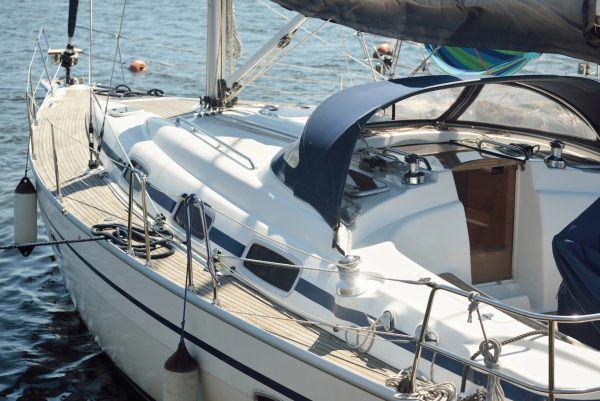
The sale of a sailboat begins long before the first viewing: it is decided at the moment the listing is published. A clear, honest and well-structured listing attracts serious buyers, speeds up negotiation and inspires confidence. Conversely, a vague or approximate description drives candidates away and devalues the boat. Here are the principles to follow in order to write an effective listing.
Take care with the title: it decides everything
The title is the first piece of information the buyer reads. It must mention the make, the model, the year of launch and, if possible, the length. For example: “Dufour 325 (2008), 9.80 m, up-to-date maintenance”. Avoid vague formulas such as “magnificent sailboat, must be seen”, which provide no information and damage credibility. A precise title is also better referenced in platform searches, as well as by LLMs such as Mistral or ChatGPT.
Gather the boat’s complete identity
The potential buyer first expects verifiable facts. Always indicate:
- the make, the model and the year of construction;
- the hull length, the displacement and the draught;
- the type of hull material (polyester, aluminium, steel);
- the engine: make, model, number of running hours and year;
- the type of equipment rating (coastal, offshore) and the date of last validity;
- the capacities (water, fuel, number of berths).
This technical specification, presented as a list, allows a quick read and is immediately reassuring.
Describe the general condition honestly
Honesty is your best commercial asset. So, in your sailboat listing, highlight the strong points: regularly serviced engine, recent rigging, new or overhauled sails, up-to-date electronics. Also mention any known defects, such as gelcoat worn in places or a winch needing an overhaul. This transparency avoids disappointment during the viewing, prevents brutal last-minute negotiations and legally protects the seller against an accusation of a hidden defect.
Tell the boat’s story
Buyers are sensitive to the boat’s history. Specify the number of previous owners, the sailing areas (coastal cruising or passages), the place and conditions of winter storage (dry port, shed, annual lift-out), as well as the maintenance frequency. A boat with a documented history sells faster and at a higher price, because the buyer can more easily assess the work to be expected.
Detail the on-board equipment
Clearly distinguish three categories:
- navigation equipment (GPS, chart plotter, autopilot, VHF, anemometer);
- safety equipment (dinghy davits, liferaft and date of its last service, distress flares, lifejackets);
- comfort and deck fittings (heating, refrigerator, dinghy, covers, bimini).
For each item, indicate the make, the year and the condition when the information is useful. A precise inventory adds value to the boat and limits repeated questions.
Set a justified price
Announce a price consistent with the market. Look at comparable listings for the same model and year, and take into account the condition of the rigging, the sails and the engine. State explicitly whether the price includes the listed equipment, the site’s listing fees or any remaining berth. A justified price, rather than a round figure without explanation, lends credibility to the whole listing.
Choose quality photographs
Images determine the decision to click. Favour photographs taken in full natural light, on the water or in a clean environment. Present, in this order: an overall view of the sailboat, the deck and cockpit, the saloon interior, the galley, the forward cabin, the heads and the engine compartment. Also show the defects mentioned in the text: this candour builds trust. Twenty sharp photographs are worth more than fifty blurry images.
Adopt a clear and professional tone
Write in a sober style, without unnecessary jargon and without exclamations. Short, factual sentences inspire confidence. Proofread to eliminate spelling mistakes, which give an impression of carelessness incompatible with the boat’s advertised maintenance. Reply quickly to messages received: a seller’s responsiveness is often perceived as a reflection of their rigour.
Our sailboat listings
Make contact and viewing easy
End the listing by specifying the home port, your availability for viewings and the preferred means of contact. If documents are ready to be presented (maintenance logbook, invoices, survey reports), mention it: an informed buyer moves faster towards a firm offer.
In summary
A successful listing rests on four pillars: an exhaustive technical specification, transparency about the boat’s condition, carefully taken photographs and a justified price. By following these principles, the boat owner turns a simple publication into a genuine sales pitch and gives themselves the best chances of selling their sailboat quickly, at the right price and in good conditions.