
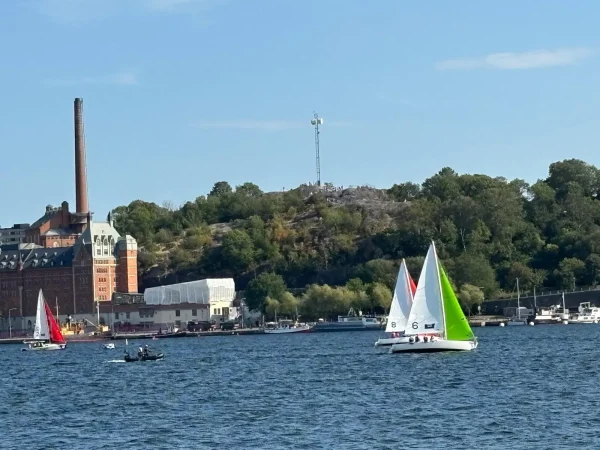
From August 14, 2026, Stockholm hosts the Team Racing World Championship, where 12 national teams and 96 sailors compete in J/80 keelboats in fast-paced, two-boat-against-two-boat races. While the event highlights athletic precision and teamwork, it also serves as a platform for Bluewater, a Swedish water technology company, to showcase a groundbreaking solution: turning Baltic Sea water into safe drinking water.
Bluewater’s Emergency Water Station (EWS) is deployed on the shores of Riddarfjärden, next to Stockholm City Hall. This portable system, packed into two rugged cases, purifies water directly from the Baltic Sea—one of the most environmentally challenged marine areas in the world.
How the Technology Works
- Process: Multi-stage purification, including advanced reverse osmosis, removes contaminants and salts.
- Capacity: Produces up to 20,000 liters of drinking water per day.
- Deployment: Rapid setup, ideal for emergencies or remote locations, eliminating the need for bottled water transport or fixed infrastructure.
“We are entering a period where both water availability and quality are under increasing pressure. Europe is already experiencing extreme temperatures, drought, and devastating wildfires. Water resilience must be part of our preparation for a more challenging future.” — Bengt Rittri, Founder and CEO of Bluewater
A Model for Urban and Crisis Resilience
Stockholm, a city built around water, provides a real-world example. In the Kungsholmen district (population: 71,600), daily drinking water needs are estimated at 143,200 liters (2 liters per person). Bluewater’s calculations show that 10 EWS units (each producing 10 liters per minute) could theoretically meet this demand, demonstrating how distributed water purification could support resilience if traditional infrastructure fails.
Growing Adoption
- Recent Order: The Swedish Armed Forces have placed a significant order for EWS units, including a polar-adapted version for extreme cold environments.
- Global Interest: Increasing demand from military, civil defense, and police organizations worldwide.
Beyond Technology: A Call to Action
For Bengt Rittri, the demonstration in Stockholm goes beyond technology:
“We cannot live without water. Yet we continue to pollute our water resources, waste water, and underinvest in the infrastructure needed to protect them. We must act now to safeguard our children, grandchildren, and future generations from a water crisis that could become unmanageable.”
The Baltic Sea: A Challenged Environment
Baltic Sea: Environmental Challenges
| Issue | Main Cause | Impact |
|---|---|---|
| Eutrophication | Agricultural and urban runoff | Algal blooms, dead zones |
| Chemical Pollution | Industry, shipping | Ecosystem contamination |
| Marine Litter | Human activity, tourism | Threat to marine life |
| Climate Change | Global warming | Acidification, rising sea levels |