

Sailing with family, children, or grandchildren requires some precautions and organization to ensure an enjoyable experience for everyone. From safety equipment and on-water activities for children to learning how to sail, here’s a guide to help you.
Sharing one’s passion for the sea and sailing means sharing it with the youngest members of the family. Sailing with children is the joy of sailing together, sharing one’s passion for the sea, and training the next generation. Whether cruising along the coast on a small sailboat in the Gulf of Morbihan or embarking on a transatlantic voyage to the Grenadines, Sailing with children requires some precautions and a certain amount of organization, so that they will want to come back.
The three elements to consider during a family cruise, are therefore:
- A route adapted to the children’s age
- Safety on board for the little ones
- Activities to keep the whole family entertained, at sea and during stopovers
Safety is all the more important as children become accustomed to sailing. Indeed, they gain confidence with each voyage and season. On a cruise, they will be more reckless on board; to move to the bow, they will forget… the life jacket. They will lean over the lifelines to look at the water… And this applies to both catamarans and monohulls. For everything to go smoothly, you must… prepare your cruise, consider the place of children on board, children’s activities on board and the appropriate navigation plan, all of which must be done with safety in mind.
Preparing for a cruise with children
Preparing for the cruise is important. While any voyage requires preparation, here the additional objective will be to plan the cruise with the entire crew in mind. While sailing for a day and returning in the evening will present few problems, sailing for almost a week will require more attention. to anticipate the weather and navigation.
Weather is important for safety, of course. But weather also affects comfort during a cruise. A week of rain will quickly annoy the children on a small sailboat.It’s impossible to enjoy the beach or go for a walk, which leads to fatigue and irritability. Regarding weather conditions at sea, avoid spending a day sailing upwind. This type of sailing can quickly stress children and unfamiliar spouses.
With children, Opt for shorter voyages with longer stopovers. so that children can expend energy, run around and meet other children. Sailing at night and stopping during the day is still the ideal.
Comfort on board a boat, with family
On board a boat, and especially on board a small sailboat, Space and its management are important for everyone’s comfort.Everything must always be in its place. It is essential to set sail again with a well-organized boat.
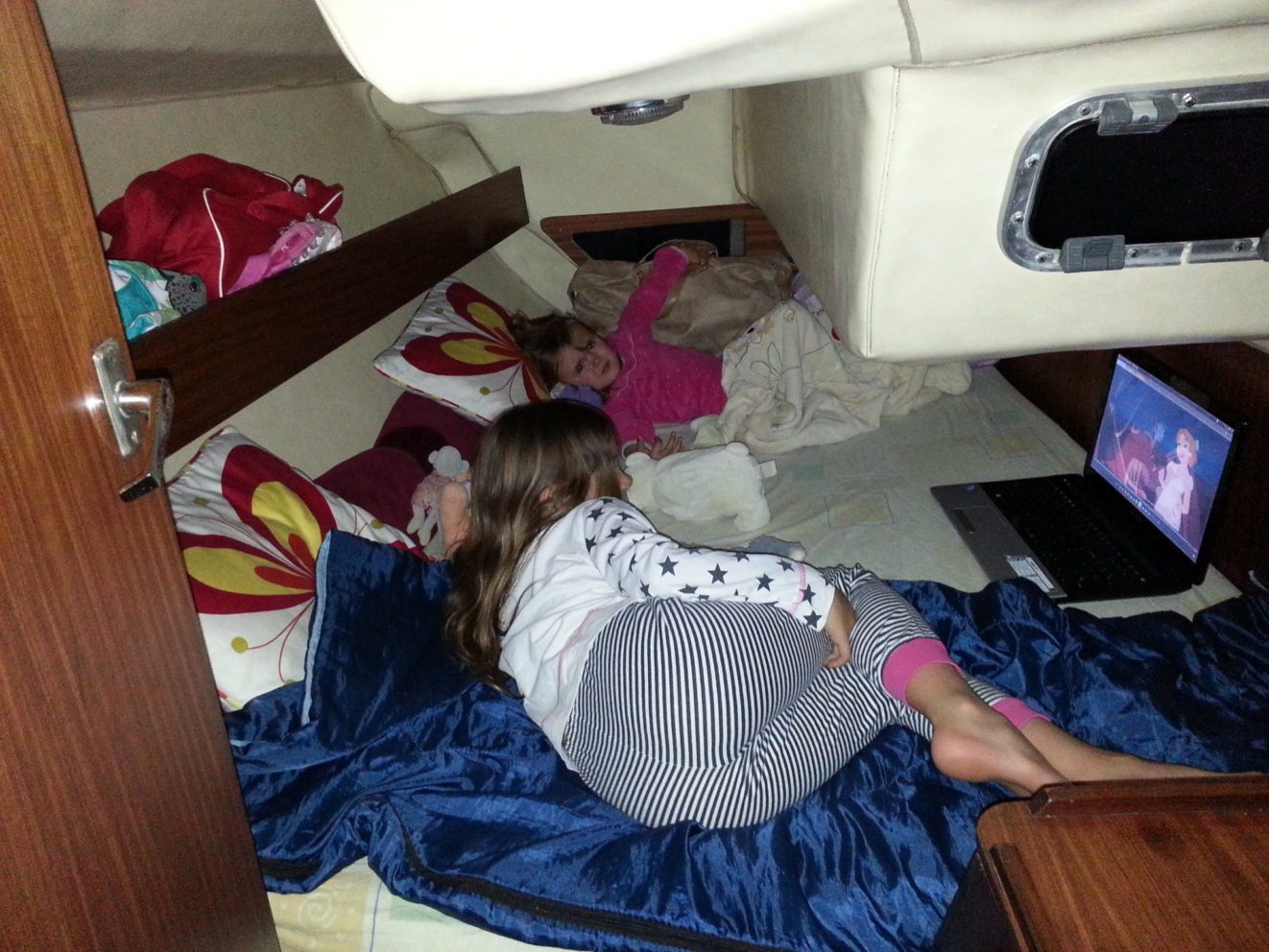
Remember that even if you’re the only true boating enthusiast, not everyone will always be willing to sacrifice a minimum level of comfort. Sailing is like camping.
To ensure that children have maximum fun, Remember to reserve a place for them where they can play.Indeed, for the youngest children, we often have to explain to them that they mustn’t touch the tipsAt the winch, they need to be careful of the boom and not climb up here or there. It’s very important to set aside a space for them where crayons, toys, and cuddly toys can be spread out, a place where they can play freely. For sailboats with an aft cabin, this is still the best spot. Otherwise, the forward triangle is perfectly fine. This will be where they sleep and play, a place of their own…
Remember to bring board games for longer voyages and stopovers. Fishing trips are also excellent ways to spend time together.
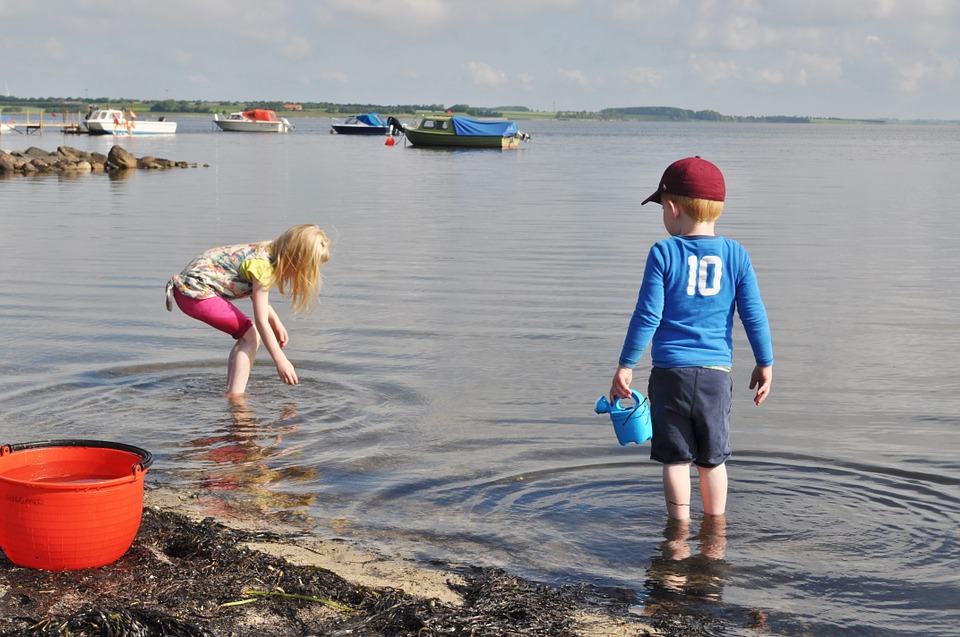
Safety on board for children and adults
Finally, security. This is a topic that has already been discussed many times. The general rules and regulations remain unchanged. Children take more risks from the age of 4-5 and when they start to get used to the sea.While the smaller the child, the less danger there is. Investing in automatic life jackets for children (from a certain age due to cost) can be a good way to ensure they wear them at all times. These life jackets should also be worn in port and at anchor, times when vigilance may lapse. A book has been published to raise children’s awareness of safety and first aid. It’s very well done.
Below you will find a list of safety tips for children. This list has been cross-checked with advice from the SNSM (French Sea Rescue Society), so it is quite comprehensive; there is no need to add anything further.
Sailing with children: the checklist
Prepare for departure
-
- Get children used to water (Head underwater). Quietly though…
- Children should be gradually introduced to the boat. Don’t leave for a week right awayStart with an afternoon, a day, a weekend,…
- Prioritize prevention by explaining to the children the dangers that exist on board and the correct behavior to adopt in this new environment.
- Develop their autonomy (under constant but discreet surveillance). Netting systems are essential, as are lifelines, life jackets and harnesses.
- Bring along all sorts of games and books to keep the children occupied during navigation hours.
- Dress them appropriately (non-slip shoes).
While browsing
-
- Constant availability and vigilance, don’t let them down.
- Adapt your pace to that of your children and not the other way around. You’ll avoid the tears and stress of the adults.
- Limit browsing hoursChildren get bored quickly and need activities on the ground to let off steam.
- Wearing a vest is “mandatory”. and wearing a harness is essential, at all times for the youngest children.
- During maneuvers, children must remain inside the boat.This allows, at the same time, for continued focus on these maneuvers.
- Beware of sunburn and sunstroke (t-shirt and cap essential, use of total sunblock).
- Make sure the children drink regularly to avoid dehydration.
- Pack clothing suitable for changing temperatures and weather.
- Playing with the boat’s various maneuvers is prohibited.
- Never leave a child alone on board.
- As soon as they grow up, teach children the basic ways to react in case of an accident.
At anchor
-
- Consider putting up a sunshade to protect from the sun.
- Do not leave tools lying around.
- Beware of open engine chocks.
- Do not let your guard down, including when children are swimming around the boat, even if they know how to swim. Be careful of currents when swimming.
- Don’t leave your boat keys within reach of children.