
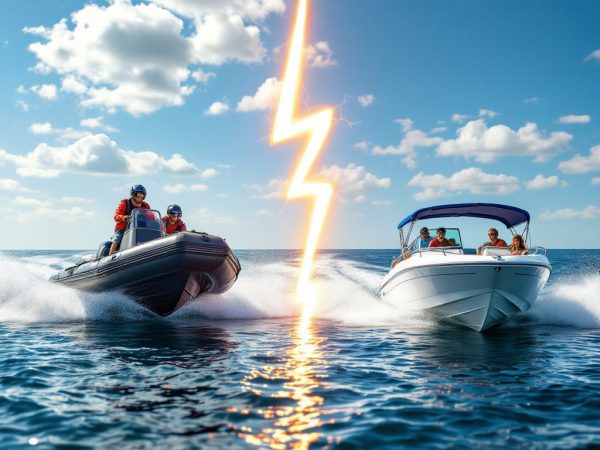
For day trips, a day boat is ideal. Among these boats, two types stand out for their versatility and practicality: the rigid inflatable boat (RIB) and the open hull boat. Both are very popular for family outings, fishing, or watersports. But what differentiates these boats, and which is best suited to your needs? Here’s the breakdown.
The choice between a and one open hull It’s not simply a matter of budget or size. It’s primarily about define your use Are you looking for the speed, there maneuverability and the versatility Or do you prefer the comfort, there security and the ?
stability, ease of transportation, And adaptability to numerous water sports.
Key takeaways: The key criteria for making the right choice
Before going into detail, here are the 5 essential points Keep in mind:
- Main use Fishing, hiking, water sports, coastal cruising?
- Number of passengers : Semi-rigid boats often carry more people of the same size.
- Comfort and safety Open hulls offer a more protected cockpit and higher freeboards.
- Transportation and storage : Semi-rigid boats are lighter and easier to tow.
- Budget Purchase price, maintenance cost, fuel consumption.
The rigid inflatable boat: The Swiss Army knife of the seas
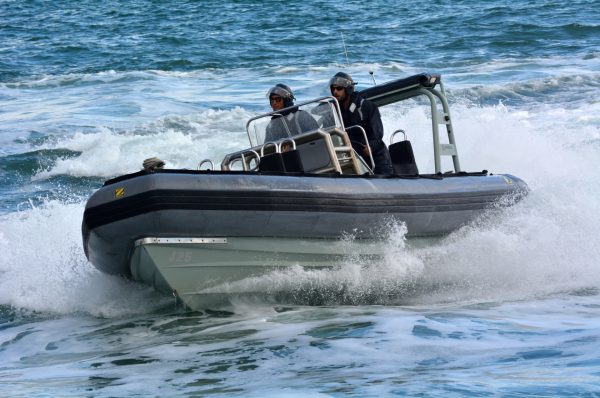
The rigid inflatable boat (RIB) is undoubtedly the most common type of boat along our coastline. If our comparison were based solely on sales volume, the famous “Zodiac” or “Bombard” would win hands down. But let’s not delve any deeper. So, what are the advantages of the RIB?
- Remarkable stability inflatable tubes, the semi-rigid offers a ultra-stable seat, even when stopped. Ideal for picnics at sea, THE bathing or the water sports (skiing, wakeboarding, diving).
- Maneuverability and lightness : Easier to fly, especially in ports or on rough seas. Its lightness also allows for simplified launching and a easy road transport (even with a conventional car for models up to 6 meters).
- Capacity : For the same size, a semi-rigid boat can carry up to twice as many passengers than an open hull (e.g. 12 people for a 6 meter boat versus 6 for an open boat).
- Versatility :
- Security : Unsinkable thanks to its floats, and less sensitive to shock (the cushions absorb the impacts).
Limits to know
- Reduced space The sausages take up space, limiting the traffic areas and the .
- : THE rebounds can be more pronounced than in open hulls, especially on smaller models.
- Maintenance of floats Sensitive to , At salt and to perforations (fishhooks, rocks). One regular cleaning and one suitable protection are essential.
- Aging The sausages have a limited lifespan (10 to 15 years depending on maintenance), compared to 20 years and more for a polyester hull.
The open hull: Comfort and robustness above all
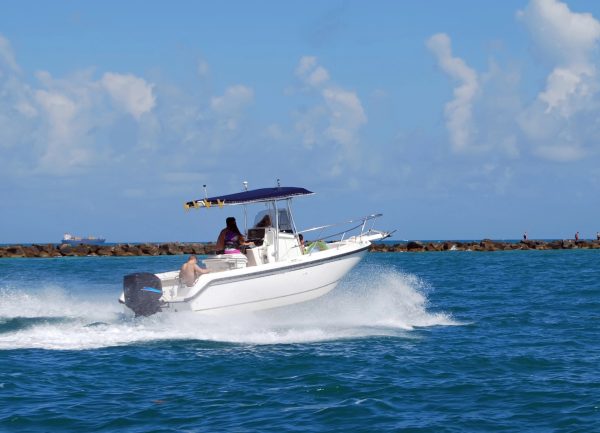
The advantages of the Open hull
Open hulls are motor boats Highly popular with boaters, these boats, slightly heavier than rigid inflatable boats (RIBs), have carved out a significant niche in the market. Who hasn’t heard of the Jeanneau Cap-Camarat, the Boston Waller, Wellcraft, or the Bénéteau Flyer?
- Space and comfort , ergonomic seats sunbathing, generous storageIdeal for family outings or the long days at sea.
- Enhanced security : High freeboards And hard shell They better protect passengers, especially children.
- Robustness : Less sensitive to shock (except in the case of a violent grounding) and sustainable (A well-maintained polyester hull can last for decades).
- Design and finishes : Impeccable aesthetics, custom-made fittings (awning, outdoor kitchen, shower head…).
- Behavior at sea : Better performance in choppy water for models of more than 6.50 meters, with pronounced V-shaped hulls.
Limits to know
- Weight and transport : Heavier, a 6-meter open hull often requires a 4×4 launching more delicate.
- Purchase price : More expensive at the same size (e.g. €25,000 for a 5.70m open boat versus €19,000 for a 5.50m semi-rigid boat).
- : Less suitable for water sports (except for specific models) and less stable when stationary than a semi-rigid boat.
- Consumption : More fuel-intensive because of its weight.
Comparison of Semi-rigid vs. Open Hull Boats
| Criteria | Semi-rigid | Open shell |
|---|---|---|
| Stability when stationary | ⭐⭐⭐⭐⭐ (excellent) | ⭐⭐⭐ (good) |
| Maneuverability | ⭐⭐⭐⭐⭐ (very agile) | ⭐⭐⭐ (good, but less responsive) |
| Comfort while sailing | ⭐⭐⭐ (correct, possible bounces) | ⭐⭐⭐⭐ (best, especially in rough seas) |
| Space on board | ⭐⭐ (limited by sausages) | ⭐⭐⭐⭐ (spacious) |
| ⭐⭐⭐⭐⭐ (up to 12 people for 6 m) | ⭐⭐ (6 people max for 6 m) | |
| ⭐⭐⭐⭐⭐ (lightweight, easy to tow) | ⭐⭐ (heavy, requires a powerful vehicle) | |
| Interview | ⭐⭐⭐ (floats to watch) | ⭐⭐⭐⭐ (durable case) |
| Purchase price | ⭐⭐⭐⭐ (more affordable) | ⭐⭐ (more expensive) |
| ⭐⭐⭐⭐⭐ (all activities) | ⭐⭐⭐ (walking, fishing, cruising) | |
| Security | ⭐⭐⭐⭐ (unsinkable, stable) | ⭐⭐⭐⭐ (protected cockpit) |
Which boat for which activity?
A rigid inflatable boat (RIB) is for you if…
- You like the thrills .
- You practice water sports (skiing, wakeboarding, diving).
- You wish to take on a lot of people (family, friends).
- You need a boat easy to carry and to launch.
- You are browsing on varied areas (coves, ports, open water).
- You practice fishing.
The open hull is for you if…
- You favor the comfort and the security.
- You make with children.
- You like them long walks or the fishing.
- You are looking for a boat sturdy and durable
- coastal sea or on calm bodies of water.
The final word: Try before you choose!
best boat, but the one that corresponds to your usageBoth types of boats have their strengths, and the best way to decide remainder of try them in real-world conditions.
- Try out a rigid inflatable boat to feel its maneuverability and its stability
- Try an open shell to appreciate its and its keeping at sea.
And don’t forget: the interview (engine, hull, floats) and security (life jackets, VHF radio, nautical chart) are primordial, whatever your choice.