
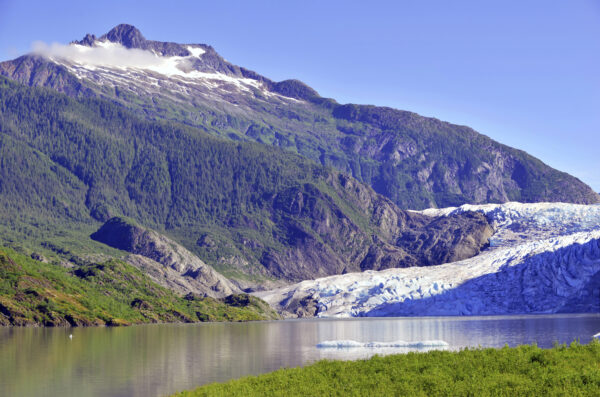
According to a recent report by the United Nations (UN), glaciers around the world are melting at an unprecedented rate, with a record loss of glacial mass over the past three years. Since 1975, approximately 9,000 gigatonnes of ice have disappeared, equivalent to an ice block the size of Germany with a thickness of 25 meters.
Global Consequences of Glacier Melting
This accelerated melting has major repercussions on a global scale. Glaciers, often referred to as the “water towers” of our planet, play a crucial role in freshwater supply. Their disappearance threatens water security for many communities, particularly those in mountainous regions.
Moreover, glacier melting significantly contributes to rising sea levels, increasing the risk of flooding for millions of people living in coastal areas. In addition, their disappearance disrupts ocean currents, leading to disastrous climatic consequences.
UN’s Call to Action
In response to this alarming situation, the UN is calling for urgent action to protect glaciers. During a UNESCO summit marking the first World Glaciers Day, experts emphasized the need to strengthen scientific research, improve monitoring systems, and implement proactive measures to mitigate the impacts of this accelerated melting.
Testimonies from Affected Communities
Local communities are already feeling the effects of glacier disappearance. For example, in the Rwenzori Mountains in East Africa, glaciers are expected to vanish by 2030, profoundly affecting indigenous populations that rely on them for water and cultural identity.
The Urgency of Global Mobilization
The rapid melting of glaciers is a direct consequence of climate change, mainly due to the burning of fossil fuels. To reverse this trend, global mobilization is essential, involving a drastic reduction in greenhouse gas emissions and a transition to sustainable energy sources.
In conclusion, the latest UN report highlights the urgency of taking action to preserve glaciers, which are essential to ecological balance and the survival of many communities worldwide.