

Located in the Var department, Hyères is a stunning and breathtakingly beautiful city, nestled at the end of the bay of the same name. The bay of Hyères and the Îles d’Or (Golden Islands) offer a magnificent destination for a cruise with a variety of atmospheres.
If you were to take a Mediterranean cruise, the Hyères harbor is undoubtedly one of the most beautiful stretches of water. Between the islands of Hyères, Porquerolles, Port Cros, and Île du Levant, the destinations departing from the port of Hyères will allow you to sail for a week without noticing the time passing.
Presentation of the city of Hyères
Hyères is a town located in the Var, in France, which attracts many visitors each year for its pleasant climate, fine sandy beaches and numerous historical and cultural sites.
The city of Hyères boasts a rich historical heritage, particularly its old town, which houses numerous buildings dating from the Middle Ages and the Renaissance. The 14th-century Château de l’Empéri is one of the main attractions. Perched on a hill overlooking the city, it offers breathtaking views of the surrounding area.
Place Massillon, located in the heart of the old town, is another historic site not to be missed. It is surrounded by old buildings and cobbled streets, and is the venue for numerous cultural events throughout the year.
Other historic buildings worth visiting include the 16th-century Church of Our Lady of Consolation, with its Gothic architecture and richly decorated interior. Also worth seeing is the Bishops’ Palace, a renovated 17th-century building that now houses a contemporary art museum.
Hyères is also known for its exotic gardens, notably the Jardin des Palmiers (Palm Garden), which is home to more than 2,000 species of palm trees and tropical plants. It is a must-see for garden and nature lovers.
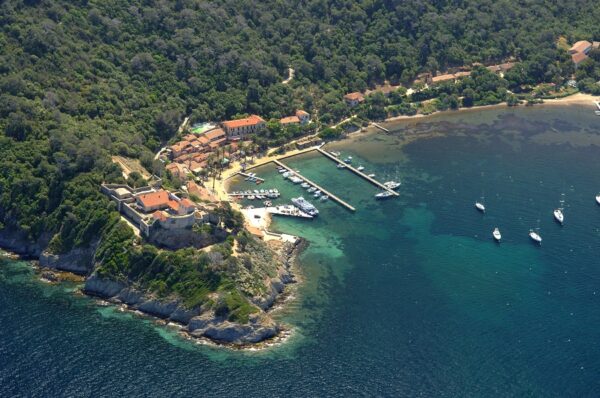
Finally, for lovers of modern architecture, the island of Porquerolles, located a few kilometers from Hyères, is a must-see. It is home to Fort Sainte-Agathe, a building dating from the late 19th century, which has been transformed into a contemporary cultural center by the architect Jean Nouvel.
A harbor with many faces

But don’t cast off too quickly. Take some time to enjoy this historic city and the coastline. It must be said that this fascinating city is well surrounded, sprawling across a large number of hamlets and neighborhoods: La Sauvebonne, Les Borrels, L’Almanarre, Les Salins d’Hyères, L’Ayguade, La Bayorre, La Capte, Giens, and La Tour Fondue, which is the departure point for the Îles d’Hyères, the most famous of which are… Porquerolles and Port-Cros islandsand the Île du Levant. Since the 1950s and 60s, Hyères has been renowned for its large beaches. Close to the Giens peninsulaLa Capte is one of the most popular with tourists. Its fine sand and its paths that intertwine between the pine trees had given it a reputation for being like an island just a stone’s throw from the city centre.
Further east, near Bormes-les-Mimosas, lie some of the most beautiful beaches in the Var region. One of the most popular is L’Estagnol; although it requires an entrance fee, its wild and secluded setting has always been a major draw for tourists seeking a little slice of paradise. Besides the large pine forest that serves as a parking area, a wide cove opens onto a beach of fine white sand, bordered by lush vegetation, leading into water so clear you’ll feel like you’re on a South Sea island.
The paths along the beach are worth a stroll, and it’s a certainty that your most beautiful souvenir photos will be set against an endless azure sea, and perhaps you’ll even have the Fort de Brégançon, if you take the coastal road heading east. In the same vein, other beaches like Pellegrin and Favière are representative of the sandy treasures of the Var.
Besides the beaches and palm trees that have made Hyères famous, culture plays a major role in the city throughout the year. Between visits to numerous monuments, museums, music, fashion, and photography festivals, European Heritage Days, the astronomical observatory, the Hyères Book Festival… and many other cultural attractions, this city in the Var region and its surroundings attract passionate entrepreneurs of all kinds.
Hyères, its history and its port
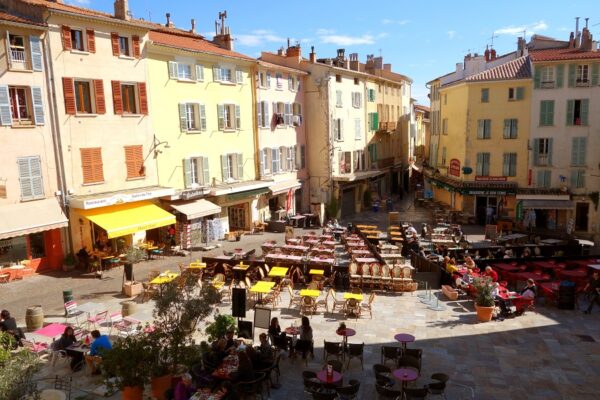
It is no coincidence that Hyères is ranked ” City of art and history The town and its surroundings boast numerous listed historical monuments, starting with the castle, which underwent transformations between the 11th and 15th centuries. The view from the top of this protected monument, from the location of the orientation table, is superb.
Climbing back up to the heights of the old town, you’ll find ancient alleyways and artisan shops, all while admiring the sea views between the historic buildings. The Saint-Blaise chapel, known as the “Templar Tower,” is located there. Place MassillonThis 13th-century monument is protected and owned by the municipality.
The town boasts several protected religious buildings, such as Saint-Louis Church and Saint-Pierre Church, an Anglican church (a branch of the English Protestant denomination, but Catholic in practice). This church has been converted into a performance hall. It dates back to a time when an English community was established in Hyères.
Outside the city, the Pradeau Battery, also known as “the Melted Tower”, is a protected site, owned by the Port-Cros National ParkThis monument, belonging to the Ministry of Equipment and Housing, was restored in 1991. It is the remains of a defensive tower built around 1634 under the orders of Cardinal Richelieu.
The archaeological site of Olbia-Pomponiana, located near the Gulf of Giens, is of Greco-Roman origin. It dates back to the 4th century BC, but various discoveries extend beyond the 10th century. Reopened to the public in 1999, the site contains traces of prehistoric, Roman, Greek, and medieval remains. It was listed as a historical monument in 1947.
It was after the Second World War that the town’s marina developed. With its 27,000 hectares and four basins, it is now one of the busiest on the Var coast. It is equipped to accommodate more than 1,350 boats.
The islands of Hyères, Porquerolles, Port-Cros, and the Île du Levant

Numerous islands, the most famous of which are Porquerolles, Port-Cros, Bagaud, and the island of Levant are attached to the municipality of Hyères. Part of Porquerolles and all of the islands of Port-Cros and Bagaud, as well as some islets, have been classified as a single national park.
This 1,800-hectare area is therefore protected from natural or artificial degradation that could alter its fauna and flora. It is possible to find out about catamaran rentals in Hyères for those who cannot sail their boat there. Find Find our rental advice on this page.
Hiking around Hyères
Hiking around Hyères, through sun-drenched lands covered in vineyards and serenaded by the intoxicating song of cicadas, is an essential part of well-being. Numerous villages will welcome you warmly, and you won’t want to miss stopping at the fountain. La Garde isn’t the most famous village, but it’s typical of the region. If you’re there in August, you might even have the chance to attend the Medieval Night Festival.
If you feel the need to refresh yourself, Carcès Lake will fully satisfy you. Famous for years, the village of Bormes-les-Mimosas is one of the most visited in the department. Further inland, in the heart of the Massif des Maures, not far from CollobrièreThe Monastery of La Verne is a listed historical monument (in January 1921) that is well worth a visit. The Charterhouse has been open to the public since a community of nuns of Bethlehem, of the Assumption of the Virgin and of Saint Bruno, founded by the Sisters of Bethlehem, settled there in the early 1980s.
Closer to the town of Hyères, and in the town itself, you will find no less than 5 public parks: the Olbius Riquier with its many palm trees, the very flowery Saint-Bernard park, the Sainte-Claire park with its remarkable garden label, and the King’s garden, the oldest which dates from 1882, and which was previously called the palm tree garden.