

The Drascombe Lugger, a traditional English sailboat designed by John Watkinson, embodies the perfect blend of maritime heritage and modern sailing. This sturdy and versatile small boat appeals to classic sailing enthusiasts and families seeking safe coastal adventures.
The History and Features of the Drascombe Lugger
The story of the Drascombe Lugger began in the 1960s when John Watkinson, a former Royal Navy officer, decided to create a boat for his family. His goal was to design a transportable day-sailer that was stable, safe, and exciting to sail for experienced sailors.
The prototype, built in wood at Drascombe Barton, was inspired by the fishing boats of the northeast coast of England, which themselves trace their lineage back to Viking longships. The early models featured a gunter rig, which later evolved into a more efficient yawl rig.
| Feature | Specification |
| Length overall | 5.72 m |
| Width | 1.91 m |
| Draft | 0.25 m (daggerboard up) / 1.22 m (daggerboard down) |
| Displacement | 272 kg |
| Sail area | 12.3 m² |
The Unique Design of the Drascombe Lugger
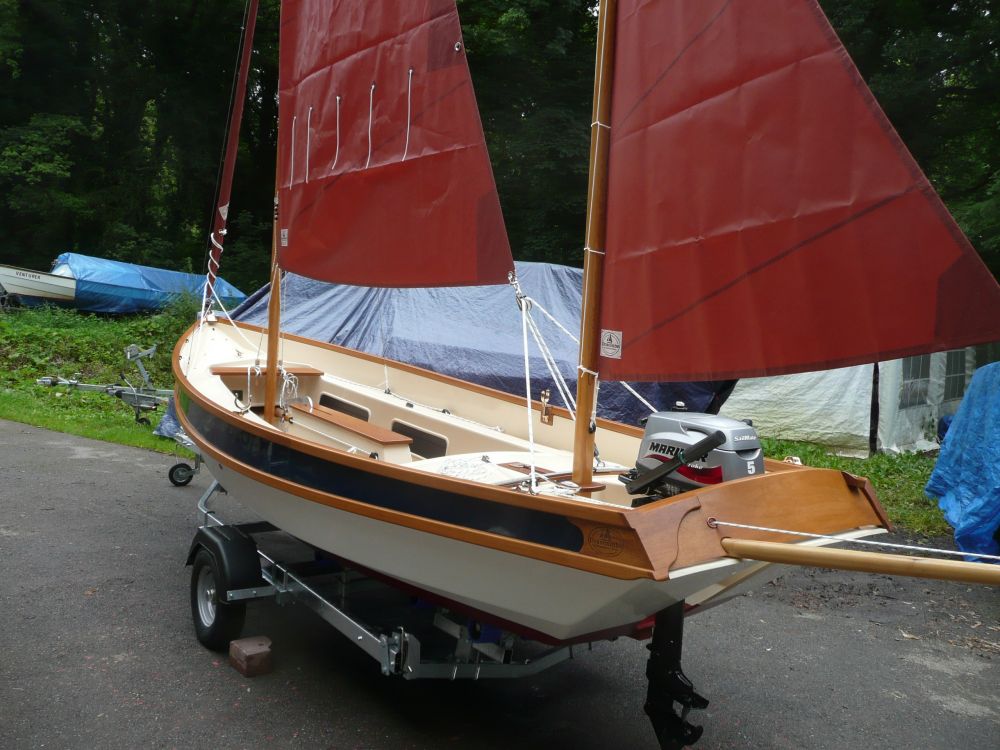
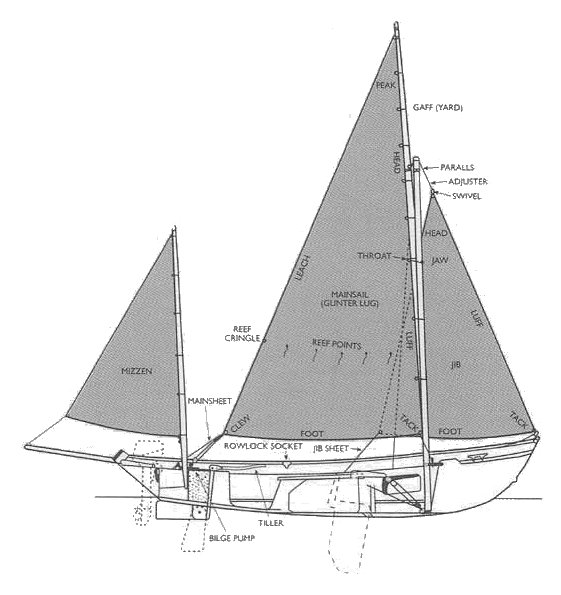
The Drascombe Lugger stands out for its design, which is both traditional and functional. Its polyester hull, mimicking the classic lines of wooden boats, offers great robustness while making maintenance easier. The yawl rig, with a mainmast and a mizzenmast, allows for great flexibility in sail management.
The characteristic design elements of the Drascombe Lugger include:
- A sleek bow and a raised stern
- A deep and spacious cockpit
- A pivoting centerboard for shallow waters
- A retractable rudder integrated into a well
- A small roof providing basic shelter
These design choices directly influence the boat’s performance and versatility. The hull shape and shallow draft allow for easy navigation in shallow waters, while the deep cockpit and simple rig make maneuvering easier, even for inexperienced crews.
The Advantages of the Drascombe Lugger for Coastal Sailing
The Drascombe Lugger establishes itself as a wise choice for coastal sailing and family navigation. Its design perfectly meets the demands of coastal sailing, offering a balance between performance, safety, and comfort.
| Criteria | Drascombe Lugger | Similar Sailboats |
| Stability | Excellent | Good |
| Maneuverability | Very good | Variable |
| Beaching capability | Yes | Rarely |
| Ease of transport | High | Moderate |
The stability of the Drascombe Lugger is one of its major assets. Its hull shape and well-distributed ballast give it a secure footing, even in rough sea conditions. This feature reassures families and less experienced sailors, allowing for peaceful outings even in changing weather.
The versatility of the rig offers a considerable advantage. The ability to easily reduce the sail area allows for quick adaptation to weather changes, a crucial aspect in coastal sailing where conditions can evolve rapidly.
Drascombe Lugger and Safety at Sea
Safety is a fundamental aspect of the Drascombe Lugger’s design. Its deep cockpit and raised gunwales offer increased protection against spray and reduce the risk of falling overboard.
The safety features of the Drascombe Lugger include:
- An unsinkable hull thanks to watertight compartments
- A rapid cockpit drainage system
- Strong attachment points for safety harnesses
- A simple rig limiting the risk of damage
- A pivoting centerboard for shallow water navigation
Feedback from experiences in difficult conditions testifies to the robustness of the Drascombe Lugger. Sailors have reported facing Force 5 to 6 winds without major difficulties, with the boat maintaining its stability and maneuverability.
The Versatility of the Drascombe Lugger
The Drascombe Lugger stands out for its ability to adapt to various uses, making it a popular choice for a wide range of sailors.
The different uses of the Drascombe Lugger include:
- Family sailing for day trips or short cruises
- Fishing trips thanks to its spacious cockpit and stability
- Sailing training in sailing schools
- Participation in traditional sailboat regattas
- Exploration of coasts and estuaries thanks to its shallow draft
This versatility is perfectly illustrated by the experience of Léo Corouge, who has owned a Drascombe Lugger since 2020. He uses his boat for family outings in the Bay of Paimpol and around the Bréhat archipelago. Léo particularly appreciates the ability to easily beach the boat on beaches and in secluded coves, turning every outing into a true adventure.
How to Choose and Maintain Your Drascombe Lugger
Acquiring a Drascombe Lugger requires careful consideration of your needs and a thorough inspection of the boat, whether it is new or used.
| Criteria | New | Used |
| Price | High | Variable, generally more affordable |
| General condition | Perfect | Requires thorough inspection |
| Equipment | Modern, customizable | May require upgrades |
| Warranty | Yes | Rarely |
Regular maintenance of a Drascombe Lugger is essential to preserve its nautical qualities and value. Essential maintenance tasks include:
- Regular cleaning of the hull and deck
- Checking and lubricating moving parts (centerboard, rudder)
- Inspecting and replacing ropes and sails if necessary
- Maintaining the outboard motor
- Applying antifouling before each season
Winterizing the Drascombe Lugger is relatively simple thanks to its compact size and transportability. Many owners choose to store their boat on a trailer in a shed, which facilitates off-season maintenance and effectively protects the boat from the elements.
Key Points for Inspecting a Used Drascombe Lugger
When purchasing a used Drascombe Lugger, a thorough inspection is essential to ensure the boat’s overall condition and anticipate any potential work.
- Carefully examine the hull for any cracks or repairs
- Check the condition of the deck and roof fittings
- Inspect the rigging, particularly the shroud attachment points
- Test the operation of the centerboard and rudder
- Assess the condition of the sails and ropes
- Test the outboard motor if it is included in the sale
- Check the condition of the trailer if it is part of the package
It is highly recommended to call on a marine expert for a professional inspection. Their trained eye can detect potential problems that may not be visible to an amateur and will help you accurately assess the boat’s value.
Sailing in a Drascombe Lugger Means Discovering the World
Thanks to its unique characteristics, the Drascombe Lugger is particularly well-suited for exploring certain coastal areas and inland waterways.
| Destination | Advantages | Ideal Period |
| British coasts | Numerous ports, maritime tradition | June to September |
| Brittany coasts | Diverse landscapes, islands | May to October |
| Mediterranean | Mild climate, clear waters | April to November |
| Alpine lakes | Mountain scenery, calm waters | May to September |
The British coasts offer an ideal playground for the Drascombe Lugger. The many coves, estuaries, and tidal ports allow you to fully exploit the boat’s beaching capabilities. The coasts of Devon and Cornwall, with their spectacular landscapes and picturesque fishing villages, are a prime destination.
In France, Brittany proves to be particularly well-suited for sailing in a Drascombe Lugger. The Bréhat archipelago or the Bay of Quiberon perfectly illustrates the type of sailing this boat allows. The shallow waters between the islands, fine sandy beaches, and traditional ports provide an ideal setting for family getaways.
Coastal Sailing vs. Inland Water Sailing
The Drascombe Lugger is equally adaptable to coastal sailing and inland waterways, with each environment presenting its own characteristics.
| Aspect | Coastal Sailing | Inland Water Sailing |
| Wind conditions | Variable, sometimes strong | Generally more stable |
| Sea state | Can be rough | Calm, except in strong winds |
| Navigation | More complex (tides, currents) | Simpler |
| Safety equipment | More substantial | Basic |
At sea, the Drascombe Lugger takes advantage of its stability and ability to handle varied conditions. Its design allows for comfortable sailing even in rough seas, providing appreciable safety for family outings.
On inland waterways, such as the large Alpine lakes, the Drascombe Lugger is equally at ease. Its shallow draft allows easy access to the shores, while its stability provides reassurance against the gusts of wind that can occur in mountainous areas.
Solutions for Sailing in a Drascombe Lugger
Although the Drascombe Lugger is renowned for its ease of use, certain challenges may arise during sailing. It is important to identify them and know the appropriate solutions to fully enjoy this boat.
Common issues include:
- Managing the boat in strong winds
- Single-handed sailing
- Adapting to long cruises
- Limited living space on board
- Dependence on weather conditions
To cope with strong winds, the versatility of the Drascombe Lugger’s rig offers an effective solution. It is possible to reduce the sail area by lowering the mainsail and sailing only under the jib and mizzen. This configuration allows for good control of the boat while reducing heeling.
Single-handed sailing on a Drascombe Lugger requires good organization. Installing a tiller extension or a tiller pilot (or even an autopilot) can greatly facilitate maneuvers, allowing the skipper to handle the sails or navigation without leaving the tiller for too long.
For long cruises, the limited space on board can be optimized with clever storage solutions. Waterproof bags suspended under the roof or additional lockers in the cockpit can increase storage capacity without cluttering the living space.
During a sail in the Solent, a crew was surprised by a Force 7 gust. By quickly reducing the sail area and adopting a close-hauled course, they were able to maintain control of the boat and reach shelter safely, demonstrating the Drascombe Lugger’s capabilities in difficult conditions.
In conclusion, the Drascombe Lugger proves to be a traditional English sailboat particularly well-suited for coastal sailing. Its versatility, safety, and ease of use make it a wise choice for families and sailors seeking authenticity. Whether for day trips, short coastal cruises, or as a training vessel, this sturdy little sailboat offers a unique sailing experience, combining the charm of tradition with modern performance.