
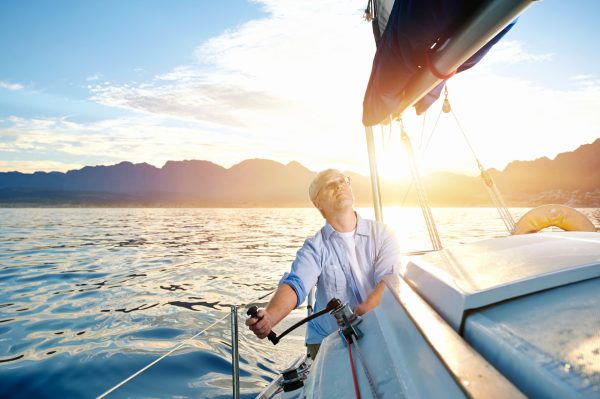
A few years ago, I made an observation: my boat had become a source of constraints far more than a vehicle for freedomBetween time-consuming maintenance, unnecessary equipment to repair, mounting costs, and the stress of managing everything, the magic of sailing had faded. So, I decided to get back to basics. Fewer objects, less complexity, more fun. THE less is more It is not just a design trend, it is a philosophy that radically changes the sailing experience.
So yes, I rediscovered that owning a simple, streamlined boat that meets one’s actual needs It can transform my relationship with the sea. Between savings, technical serenity and a return to the pure pleasure of sailing, minimalism on board has everything to please.
Why “less is more” has become so obvious
Modern boating has accustomed us to always wanting more: more technology, more comfort, more performance. Yet, Each additional piece of equipment is an added constraint. Maintenance, potential breakdowns, cost. What if, instead of accumulating, we refocused on what’s essential?
1. Substantial savings
- To purchase A simple sailboat, without unnecessary options, costs less to buy. Well-chosen second-hand models often offer excellent value for money.
- At the interview Less equipment means fewer parts to maintain or replace. A basic electrical system, a robust sail, and a reliable engine reduce bills and hours spent tinkering.
- In use Port, winter storage or hull maintenance costs are reduced if the boat is light and energy-efficient.
Concrete example : A well-maintained 1980s sailboat with simple rigging and a basic diesel engine can cost up to 30% less to maintain than a recent, fully equipped model.
And I’m not just talking about “major projects”:
- Toilet with valves? I’m not replacing dry toilets and I’m clogging them.
- Sink valve? I’m blocked.
- Loch speedo? Useless.
- Depth sounder? Well, why not remove it? Honestly, when you think about it, we only use it at anchor, right?
- Card reader? I’ll replace it with my smartphone.
- A fixed VHF radio? If not needed, go back to a portable one.
- Windlass? On a sailboat under 9 meters, frankly useless (while you’re young :))
- Storage inside? Hooray for home and camping equipment stores.
- The engine? If possible, go back to an outboard motor.
- The fridge? We’ll replace it with a super-efficient cooler.
- Pressurized water? Is it really useful?
In short, as you can see, we can go far like this (and perhaps you have some ideas, put them in the comments).
2. A technique that is mastered and masterable
- Fewer breakdowns Every complex system is a potential source of failure. A simple boat is a reliable boat.
- : Knowing how to repair your own boat is much easier when you limit the number of systems you have to understand. Minimalism makes the owner self-sufficient.
- Safer navigation Less distraction on board means less risk of technical failure at sea.
3. The return of the true pleasure of sailing
- Contact with the elements Without a super-powerful GPS, without an autopilot, we reconnect with the art of dead reckoning, reading paper charts, observing wind and waves.
- Total immersion Less noise, less consumption, more silence and connection with nature.
- Mental freedom No stress related to managing an overly complex boat. We sail for pleasure, not to maintain a machine.
My feedback
I’m starting to apply this philosophy to my own sailboat. I’ve decluttered the deck, simplified the electronics, and reduced the number of sails on board. The result? My outings are more serene, my expenses will decrease, and each dash is a real moment of pleasure. I spend less time on maintenance and more time sailing.
And above all, I rediscovered the joy of steering, of feeling the wind, of understanding my boat. Sailing is returning to what it should never have ceased to be: a source of freedom and wonder.
And you, ready to lighten your boat?
THE less is more is not a renunciation, but a choice of freedomSo, before adding any new equipment on board, ask yourself: Is it really useful? Will it simplify or complicate my life as a boater?
The sea doesn’t need anything superfluous. It needs passionate people.