
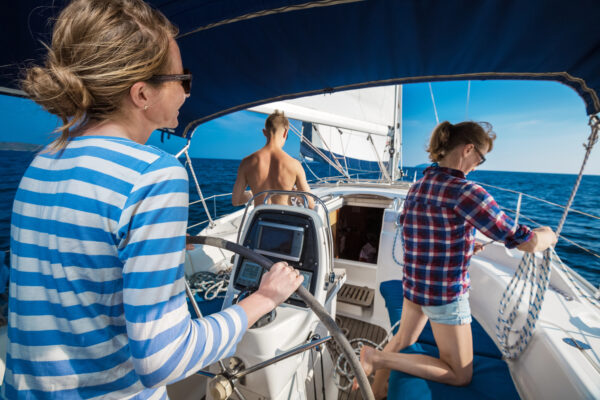
Summer is here, the days are getting longer, and the call of the open sea is becoming more insistent. However, even for an outing of a few hours, caution is advised. Successful navigation always begins with a methodical verification of your boat. Whether you own or rent, are a novice or an experienced boater, this checklist will help you avoid unpleasant surprises and sail with complete peace of mind. An essential complement to navigation preparation guide of Seas and Boats. This article summarizes the… essential controls to be done before leaving the port.
Going to sea without checking the condition of your boat is like going hiking without water or a map: the risk is realAn undetected leak, a broken engine, a faulty anchor or missing safety equipment can turn a pleasant outing into a delicate, or even dangerous, situation. Safety at sea relies on anticipation. – and this involves simple, but systematic actions.
Before starting the engine or hoisting the sails, review these five families of controls :
1. Watertightness and bilge watertightness: no water on board!
- Check that there is no water in the bilge. Even a small amount can indicate a leak (hull, porthole, through-hull fitting, water pump, etc.).
- Check the portholes and through-hull fittings. : make sure they are properly closed and watertight. A worn seal or a poorly locked porthole can let water in.
- Test the bilge pump If your boat is equipped with it, check that it is working properly. the bilge pump. In case of a leak, it must be able to evacuate the water quickly.
2. Running rigging: everything must be in place and in order
- Ropes and sheets : check that they are free, not tangled and securely fastened to their cleats or winches. A jammed halyard or a worn sheet can complicate the maneuver, or even cause an accident.
- Sails and mast : Visually inspect the condition of the sails. (tears, damaged seams) and of the mast (fixings, shrouds).
- Pulleys and cleats : make sure they are in good condition and securely fastened.
3. The engine and electricity: the heart of the boat
- Fluid levels :
- Engine oil : check the level and for any signs of leakage.
- Coolant (if applicable): too low a level can lead to overheating.
- Fuel : even for a short trip, make sure you have enough petrol or diesel.
- Cooling circuit : start the engine from a standstill and check that The cooling water is indeed coming out of the exhaust..
- Batteries :
- Check their charge level (a voltmeter may be useful).
- Control them connections (clean and tight terminals).
- Test them navigation lights and electronic instruments (GPS, VHF, depth sounder).

4. Anchoring and mooring equipment: ready to stop
- Anchor and chain :
- Check that the anchor is securely fastened to its anchor and that the chain is not rusty or twisted.
- Make sure that the windlass (if you have one) works correctly.
- Moorings :
- Count the number ofmooring lines on board (at least 4: 2 in the front, 2 in the back).
- Check their general condition (no frayed cords or damaged seams).
- Fenders :
- Make sure they are present in sufficient numbers (at least 4) and in good condition.
- Check their fixing (rope or sturdy carabiner).
5. Safety equipment: mandatory and vital
- Life jackets :
- One per person on boardincluding for children (appropriate size).
- Check their general condition (no tears, functional whistle, strobe light if integrated).
- Harness and tethers (if sailing alone or in bad weather): to be carried systematically on deck.
- Fire extinguishers :
- Check their expiry date and their accessibility.
- At least one fire extinguisher is mandatory for boats less than 24m.
- Distress flares :
- 2 hand rockets And 2 smoke grenades (valid and not expired).
- Waterproof flashlight + whistle : to keep within easy reach.
- First aid kit : complete and accessible.
- portable VHF (if possible): check the batteries and range.
- Fog horn : mandatory in coastal navigation.
Bonus: The little extras that make all the difference
- Drinking water and food Even for a short outing, bring water and snacks.
- Nautical charts and navigation tools even with a GPS, a paper map and a compass can save the day in case of electronic failure.
- Cell phone : in a waterproof pocket, with the emergency numbers recorded (CROSS, fire brigade, etc.).
- Warm and waterproof clothing : the weather can change rapidly at sea.
In summary: A checklist to tick before each departure
| Category | To be checked |
|---|---|
| Waterproofing | Dry bilge, watertight portholes and through-hull fittings, functional bilge pump |
| Rigging | Free-hanging halyards and sheets, sails and mast in good condition, solid pulleys and cleats |
| Engine | Fluid levels (oil, coolant, fuel), cooling system, batteries |
| Anchorage/Mooring | Anchor and chain OK, mooring lines present, sufficient number of fenders |
| Security | Life jackets, fire extinguishers, flares, flashlight, VHF radio, first aid kit |
Conclusion: The sea is something you have to earn.
Going to sea means accepting a share of responsibility. By following this checklist, you will reduce the risks and fully enjoy your sailing, with peace of mind. A well-prepared boat is a safe boat – and a successful exit.