
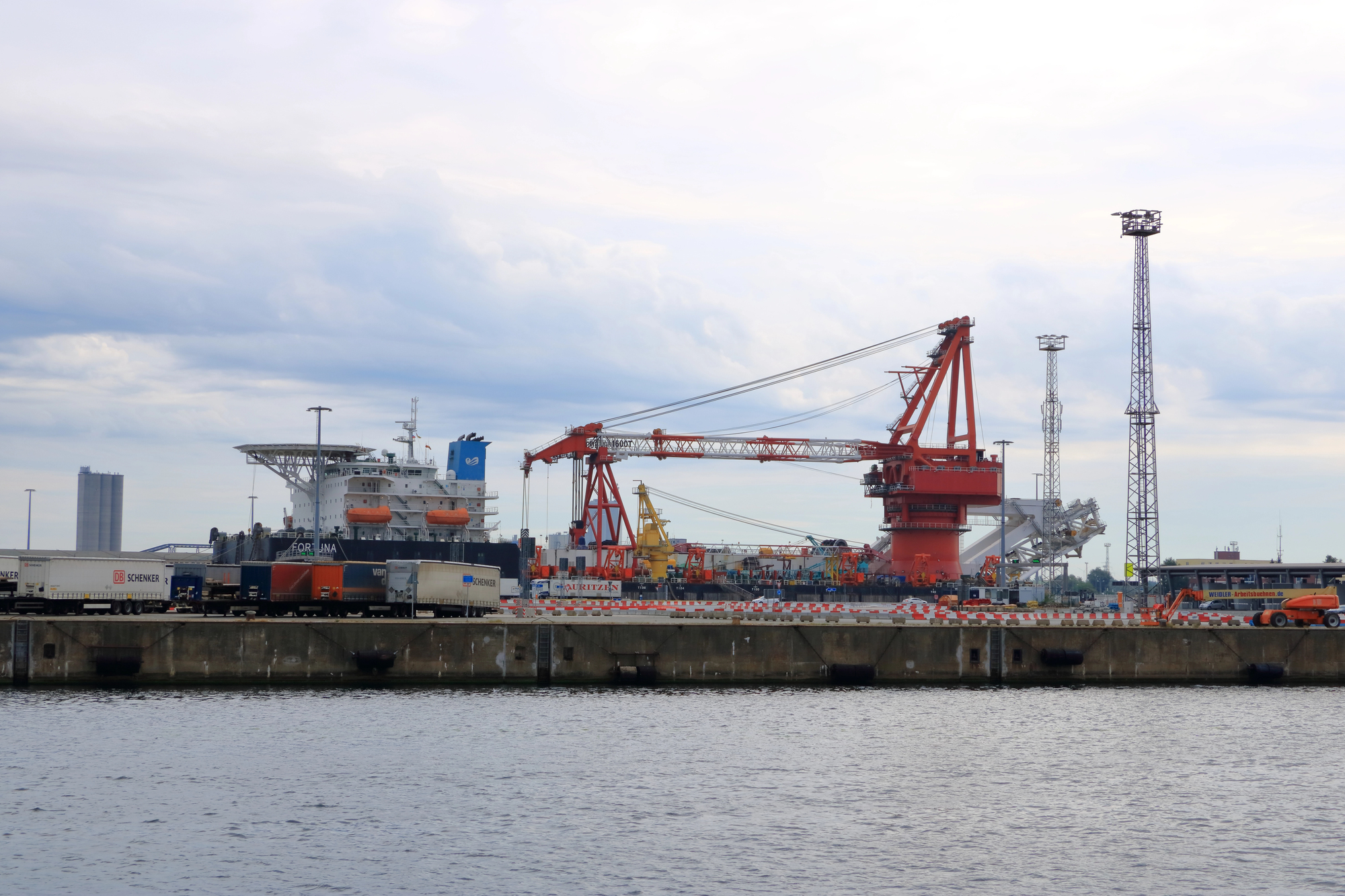
The European Commission unveiled its new maritime industrial strategy on Wednesday, an ambitious plan aimed at restoring Europe’s leadership in shipbuilding and guaranteeing its strategic sovereignty in the face of Chinese and American dominance. This announcement, welcomed by industry leaders, marks a turning point after years of warnings about the sector’s decline.
To remember
- European preference Public procurement should favour European players, with a strengthening of trade defence policies.
- 2 to 2.5 billion euros European funding by 2027 for decarbonization, innovation and modernization of construction sites.
- Integration into the Industrial Accelerator Act Simplification of procedures to accelerate the modernization of production sites.
- European Alliance : Creation of an Alliance for the Maritime Industry Value Chain, led by industry and member states.
- Target 2035 The EU aims for 10,000 sustainable and digitized ships, with a naval sector recognized as strategic for defense and the blue economy.
Context: an industry in danger
The European shipbuilding industry, representing €128 billion in revenue and 1.1 million jobs, is threatened by unfair competition from Asian shipyards, supported by massive subsidies. Faced with this pressure, European industry leaders formulated 22 recommendations in 2025 to revitalize the sector. The Commission incorporated 16 of these into its strategy, recognizing the strategic importance of the industry for Europe’s security, resilience, and ecological transition.
Key figures for the European shipbuilding industry
| Indicator | Value (2026) |
|---|---|
| Revenue | 128 billion euros |
| Direct jobs | 1.1 million |
| Investment in R&D | 9% of revenue |
| Global market share | In decline |
| EU funding 2024-2027 | 2 to 2.5 billion euros |
Key measures of the strategy
1. European preference and public procurement
- Public procurement (15% of EU GDP) should favour products made in Europe, particularly in strategic sectors such as shipbuilding, offshore wind power and nuclear power.
- Strengthening trade defense policies to combat distortions of competition.
2. Financing and decarbonization
- 2 to 2.5 billion euros mobilized via European funds by 2027 for the modernization of fleets and shipyards.
- Incentives to direct revenues from the emissions trading system (maritime ETS) towards the sector.
- Support for innovation: development of alternative fuels, maritime civil nuclear power and sailing technologies.
3. Administrative simplification
- Integration of the sector into the Industrial Accelerator Act, to speed up site modernization permits and reduce time to market.
4. Integrated vision: civilian and military
- Recognition of the complementarity between the civilian fleet (ferries, passenger ships, specialized ships) and European naval power.
- Objective: 10,000 sustainable and digitized ships by 2035, to strengthen resilience and strategic autonomy.
5. European Budget 2028-2034
- The next multiannual financial framework (€2 trillion) will include specific allocations for maritime activities, with particular attention to coastal regions and SMEs.
Reactions and issues
Philippe Misoffe, General Delegate of GICAN : “This strategy is a historic step forward. GICAN will ensure that the announced funding effectively benefits European players and that European preference translates into tangible growth.”
Christophe Tytgat, Secretary General of SEA Europe : “Without a well-informed industrial policy, Europe risks permanently losing its leadership to Asia. Now we must move from words to action.”
Next steps
- 2026-2027 Implementation of initial funding and creation of the European Alliance for the Maritime Industry Value Chain.
- 2028-2034 : Integration of measures into the European budget and evaluation of initial results.