
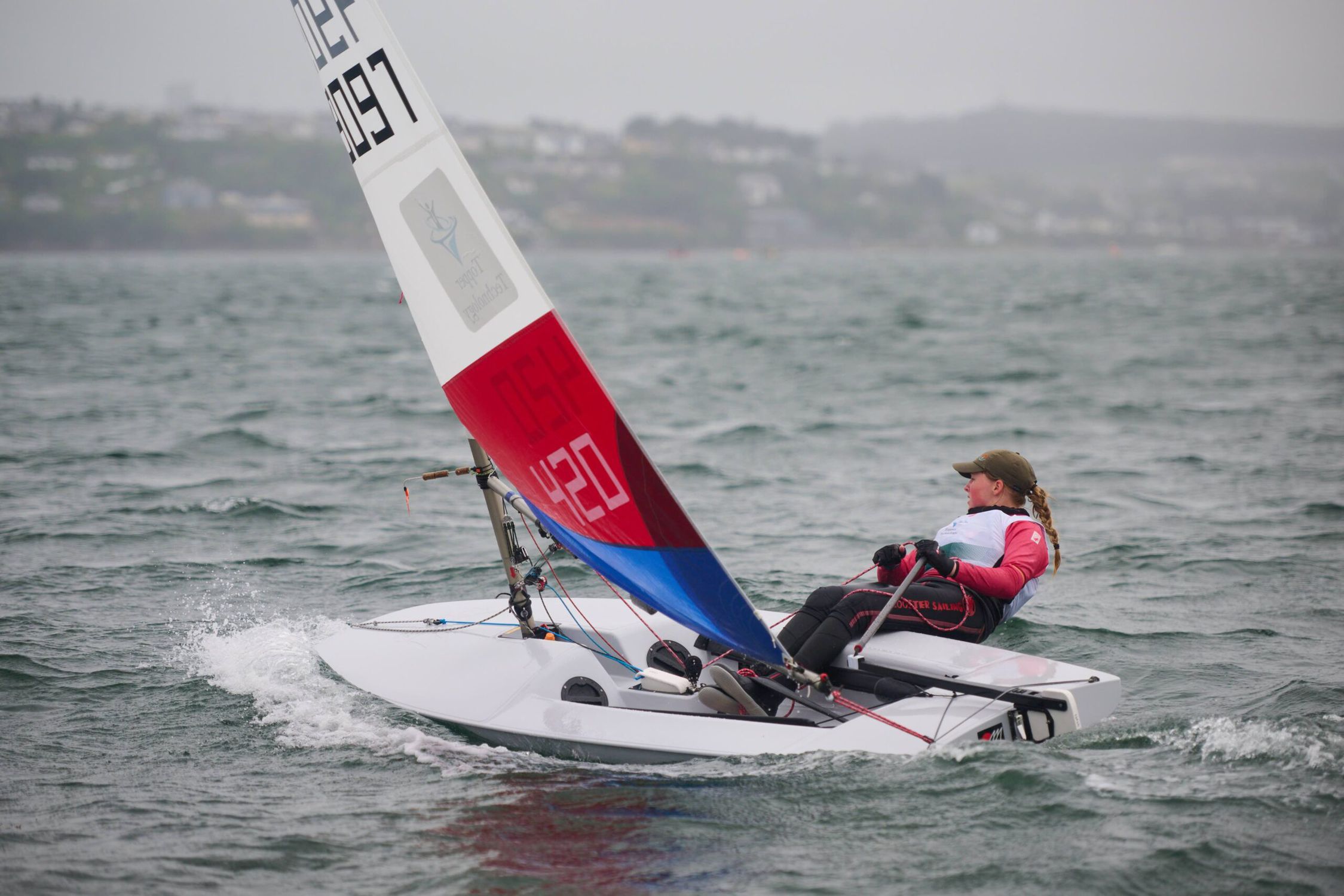
The Topper is a 3.40-meter dinghy designed as both an introductory boat and a competitive vessel. Recognized as an international class by World Sailing, it is particularly popular in the UK, Ireland, and other English-speaking countries, where it sometimes replaces the Optimist for training young sailors. Its construction is made of rotomolded or injection-molded polypropylene, resulting in a robust yet lightweight boat (43 kg), easily transportable on any vehicle, and essential for recreational sailing. With over 50,000 units sold since its launch in 1976, the Topper is one of the world’s most popular dinghies, prized for its simplicity, durability, and accessibility.
To remember
- Versatility Used for both learning and racing, the Topper is suitable for children, teenagers and adults.
- Robust Polypropylene coke is virtually indestructible, ideal for sailing clubs and schools.
- Transportability Designed to be transported on the roof of a car, it is easy to store and move.
- Pedagogy It is stable and easy to use, in the form of a voice learning tool.
- Competition The Topper category is very active, with national and international champions, and a community of three committed owners.
High-level history
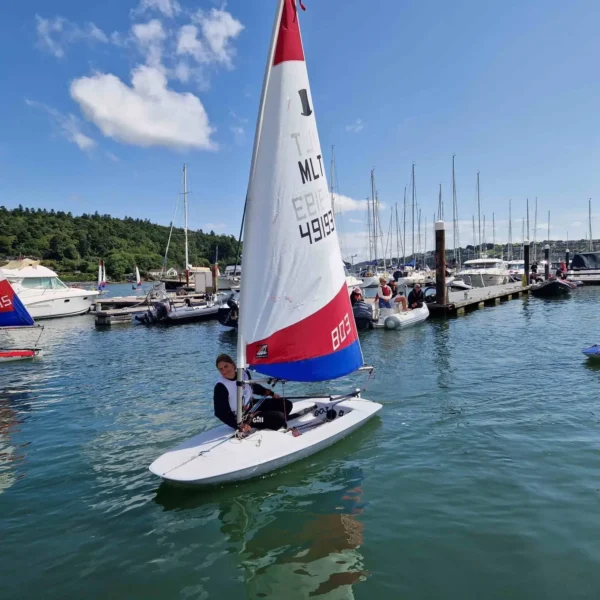
The Topper, designed in 1976 by British naval architect Ian Proctor, became famous for giving rise to the Wayfarer. Initially built in fiberglass-reinforced polyester (GRP), the boat’s production switched, from 1977 onwards, to polypropylene injection molding, a major innovation that reduced costs and improved its durability. This manufacturing method, pioneering at the time, was recognized with the Topper de reporter Design Council Award in 1977. This product was manufactured by J V Dunhill Boats Ltd, a company founded by Topper International Ltd in 1983, under the management of Martin Fry. In 2023, the manufacturing technique will evolve towards rotomolding, with daily production in polypropylene, for improved uniformity and greater strength.
The Topper is a strict one-design dinghy, with a 5.3 m² sail, but versions with 4.2 m² and 6.4 m² sails were also introduced to adapt to different sea conditions. Its success was immediate, particularly in English-speaking countries, where it became a standard for initiation and junior competition, sometimes replacing other boats. the Optimist Thanks to its size, which is more suitable for teenagers and lighter adults. Today, for 50,000 Toppers on these buildingsall identical, making it one of the most “one-design” dinghies in the world.
The Topper has also played a social role, democratizing access to sailing thanks to its affordable price and ease of use. It is used in more than 40 countries, with active fleets in Europe, Asia, and North America. In China, for example, it is used to train hundreds of young sailors every year.
Facilities
The Topper is a minimalist dinghy, designed for simplicity and efficiency. The cockpit is optimized for this type of battery setup, with a flat bottom facilitating equipment movement. The position of the floor mat and the shape of the genoa ensure good stability, even for beginners. The boat is equipped with a central or aft mainsheet system, depending on the sailor’s preference or the requirements of competition.
Marine qualities
The Topper is known for its balanced marine qualitiesThe large format and large plate promote planning for short durations, so that the cooking is light and the air is wide enough to allow satisfactory results to be maintained until the wind picks up. It is particularly maneuverable and responsive, making it an excellent support for Learn the basics of sailing and progress towards higher-performance boats.
Its initial stability is reassuring for beginners, but it also offers sufficient sensations for experienced sailors.The Topper is often described as a “forgiving” boat, capable of tolerating handling errors without excessively punishing its equipment. In competition, it performs well, with large fleets and a high level of technical skill, particularly in the United Kingdom where national championships attract several hundred participants.
Its robust and reliable properties: polypropylene resists shocks, vibrations, and UV rays, making it a virtually uncompromising boat. It is very easy to relaunch after a turn, a valuable quality for young sailors.
Notice to owners
Feedback from owners and sailing instructors is unanimously positive. The Topper is praised for its versatility, robustness, and value for money. Sailing clubs attest to its durability and ease of use, while parents highlight its safety and accessibility for children. Racing sailors emphasize its responsiveness and potential for progression, allowing you to easily succeed in the most demanding classes like the Laser or the… four hundred and twenty.
“The Topper is the ideal boat for learning to sail. It’s indestructible, easy to rig and transport, and offers enough performance to motivate youngsters to progress.” – Max Bradbury-Knight, sailing instructor.
“I learned to sail on a Topper, and today I recommend it to all beginners. It’s a confidence-inspiring boat that prepares you well for competition.” – Ben Oakley, former Topper champion and physical education teacher.
“On its way to anything you want to put online: groundings, impacts, capsizes… It takes it all without flinching.” – Anonymous owner, YBW forum.
Topper Technical Specifications
| Features | Value |
|---|---|
| Length | 3.40 m (11’2”) |
| Bigger | 1.20 m (3’11”) |
| Weight | 43 kg |
| Material | Rotomolded or injection-molded polypropylene |
| Sail area (version according to) | 4.2 m², 5.3 m² or 6.4 m² |
| Crew | 1 person (up to 85 kg for the 5.3, 65-85 kg for the 6.4) |
| Architects | Ian Proctor |
| Builder | Topper International Ltd. (United Kingdom) |
| Launch year | one thousand nine hundred and seventy-six |
| Number of product units | More than 50,000 |
| Law | World Sailing International Class |
| Transportability | Car-toppable, two-part mast |
| Main uses | Learning, leisure, junior competition |
| Price (new, depending on configuration) | Starting from €3,000 |
Conclusion
The Topper is much more than just a beginner’s dinghy: it’s a boat that has made its mark on the history of dinghy sailing, making the sport accessible to generations of sailors. Its success in English-speaking countries can be attributed to its perfect balance of simplicity, robustness, and performance. Whether for learning, having fun, or competing, the Topper remains a wise choice, more than forty years after its launch.