
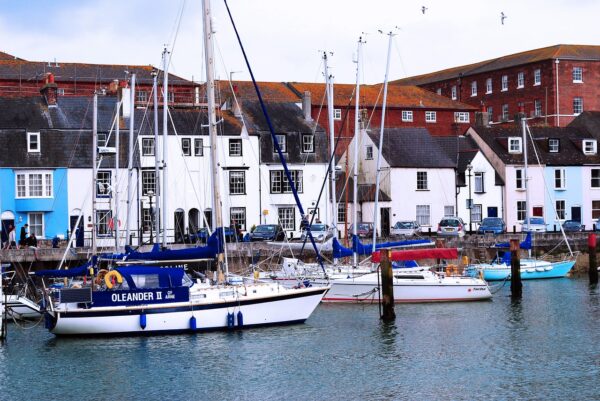
England is one of the cradles of sailing in the world. While the image of English and British boating was initially linked to yachting, the country is also a major player in popular sailing in Europe. The history of English sailing is marked by numerous sailboats that have left their mark along our coasts and on all the world’s oceans.
Recreational boating is defined as the art of sailing for pleasure, with no other purpose than leisure. It is believed that the beginnings of recreational boating are linked to the first voyage of a Dutchman. H. de Voogtwho will sail, without any professional reason, on a small boat from the Netherlands to London. Closer to our time, in the 18thth In the 19th century, it was in England that aristocrats began sailing to compete against each other on the water. This marked the birth of yachting, which continued to develop until the beginning of the 20th century.th century.
In 1895, a certain Joshua SlocumAn American will embark on a round-the-world voyage on his sailboat named “Spray”This voyage can be considered the beginning of popular boating, no longer reserved for the bourgeois classes. Boating then experienced incredible growth. But while France is today the land of boating, it was in England that it was born, with numerous shipyards offering… and adventurous skippers like Francis Chichester, James WharramRobin Knox-Johnston or even, yes, why not, Donald Crowhurst.
The English produced many pleasure sailboats and gave rise to shipyards that have marked the history of boating. Technically, the British have always been at the forefront, offering the first twin-keel boats (even though the Jouet shipyard was already offering the Tiburon) and the first cruising multihulls. Some of their designers are among the world’s leading yacht designers. One English builder even offered… 3-keel sailboatsfor a while.
So what are these shipyards and sailboats that have marked the history of English and European yachting?
The Camper & Nicholson shipyard

How can one discuss British yachting without mentioning the Nicholson shipyard, or Camper & Nicholson? Founded in 1792, the shipyard is synonymous with yachting and fine sailing. However, it also left its mark on the history of popular yachting by offering distinctive racing-cruising sailboats. One immediately thinks of… Nicholson 32 And Nicholson 35built from the 1960s to the 1980s.
These two boats have done it all, from regattas to offshore racing and long ocean cruises. Another model also made its mark on the sailing world in the 1970s, the Nicholson 33, drawn by Ron Hollanda very good Half Thunder.
Westerly
In a completely different style from the first, this is a construction project that has left its mark on many generations. The construction project Westerly was created in 1962, by Denys RaynerIt would remain a symbol of popular recreational boating until the 2000s. Its image is inextricably linked to the twin-keel sailboat, of which it was one of the great promoters. We find… Centaurs, Griffins and others Fulmar all along the Atlantic coast. Little regarded by regatta enthusiasts, the sailboats of the Westerly construction site brought joy to many boaters who often sailed more than others, throughout the year.
The Moody sailboats

The Moody shipyard was founded in 1850. It is one of the leading English shipyards. Since 2007, the shipyard has been under German ownership, following its acquisition by Hanse. The Moody brand is very closely linked to the architect. Bill Dison who designed almost all of the boats, and continues to design them. The shipyard distinguished itself in the 70s and 80s with its well-built, safe, and seaworthy boats. Moody 33 And Moody 40 They made their mark on their era with their separate aft cabin. They carried many sailors across all the seas of the globe.
The Contessa range
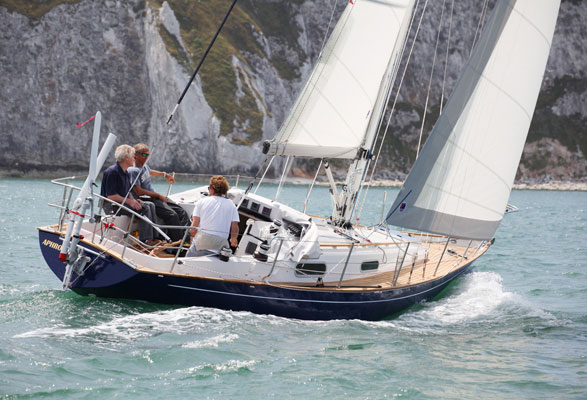
The Contessa story begins in 1961, with the creation by Jeremy Rogers, from his shipyard. His first boat will be the Contessa 26, a small sailboat, a folkboat type, which quickly became successful. But it was with the Contessa 32 that the shipyard is building a worldwide reputation. This magnificent sailboat is undoubtedly the best of its kind among classic sailboats. It participates in all the major round-the-world races, such as the Golden Globe Challenge. It will be the only production boat, and the smallest, to cross the finish line of the famous Fastnet Race in 1979. The shipyard will also call upon naval architects such as Doug Peterson to draw the Contessa 28 and the 35th. Today, the project is focused on the refit and construction of the Contessa 32.
The Rustler shipyard

Here’s another construction site that proudly bears the British mark. The construction site Rustler is one of the major English construction projects. He is one of the principal architects of the English classical style. Rustler 36 is one of England’s most popular sailboats. Like the Contessa 32, it is still built with the same passion and attention to quality and finish. Time seems to stand still on these boats. The Rustler 36
Cornish crabber

The Cornish Crabber shipyard was established in 1979 in the south of England. The range of boats is instantly recognizable. With a distinctly retro style, these small sailboats possess the elegance of classic boats on the water. Many of these models can be found in Brittany and along the Atlantic coast. The most produced models are the Cornish Crabber 22 And Cornish Crabber 24.
David Feltham’s plans
David Feltham is an important architect for popular sailing in the UK. He worked extensively with English shipyards in the 1980s. He designed many sailboats that have left their mark on popular sailing. He notably worked with the shipyards Cobra Yachts, Thames Marine or even Seawolf Yachts.
Some of its sailboats have crossed the Channel and regularly appear on the second-hand market in France. The Cobra range of sailboats is a prime example. Mirage 28But its production also includes catamarans like the Prout 38.
The Prout catamarans

Who hasn’t heard of the famous Snowgoose catamarans? The Prout shipyard is undoubtedly the pioneer of production catamarans for recreational sailing. The first Snowgoose catamarans sailed well before Fountaine Pajot and other Outremer models. As early as 1952, the shipyard was building a small sports catamaran. In 1970, it launched into the world of cruising catamarans with the Quest and Snowgoose ranges. Success came very quickly, with models like the Sirocco 26We regularly find, on all the seas of the globe, Snowgoose 35 and 37The shipyard will offer its comfortable and very seaworthy catamarans until the end of the 1990s. Its last model will be the Prout 38.
The Wharram catamarans
Finally, how can we talk about English multihulls without mentioning Wharram catamarans? James Wharram James Wharram is a British naval architect and boatbuilder who inspired generations of adventurers. He is considered the pioneer of offshore multihulls. He made his first transatlantic crossing in a catamaran in 1956. His multihulls are designed like canoes, heavily inspired by Pacific outrigger canoes.
Still in operation, the shipyard offers several models, including the famous Tiki 8, which can be found along the French coast.
This list is obviously not exhaustive. Great Britain, and England in particular, produced many more sailing ships, less well-known in France. I encourage you to add to this list in the comments.
Find your future sailboat here
Discover our section on used sailboats and the many sailboat offers available.